Provenance
Van Wisselingh, London. Kraushaar Galleries, New York. Sold to William G. Mather, Cleveland, 1911. Bequeathed to the CMA in 1951.
Accession Number
1951.328
Medium
oil on wood panel
Dimensions
Unframed: 39.9 x 60.3 cm (15 11/16 x 23 3/4 in.)
Classification
Painting
Credit Line
Bequest of William G. Mather
Tags
Painting Impressionist & Modern (1851–1900) Oil Painting Panel Painting French Color: Yellow Color: Gold
Background & Context
Background Story
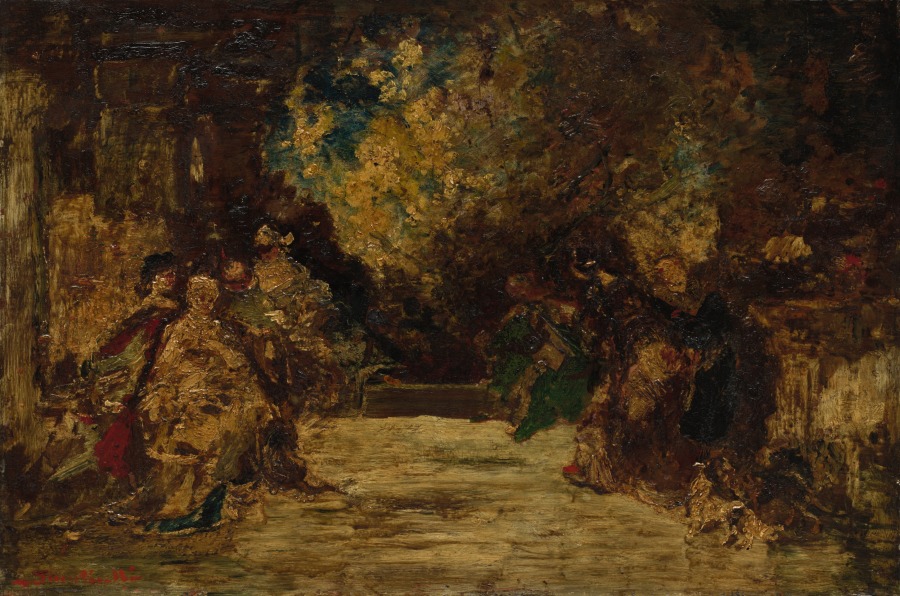
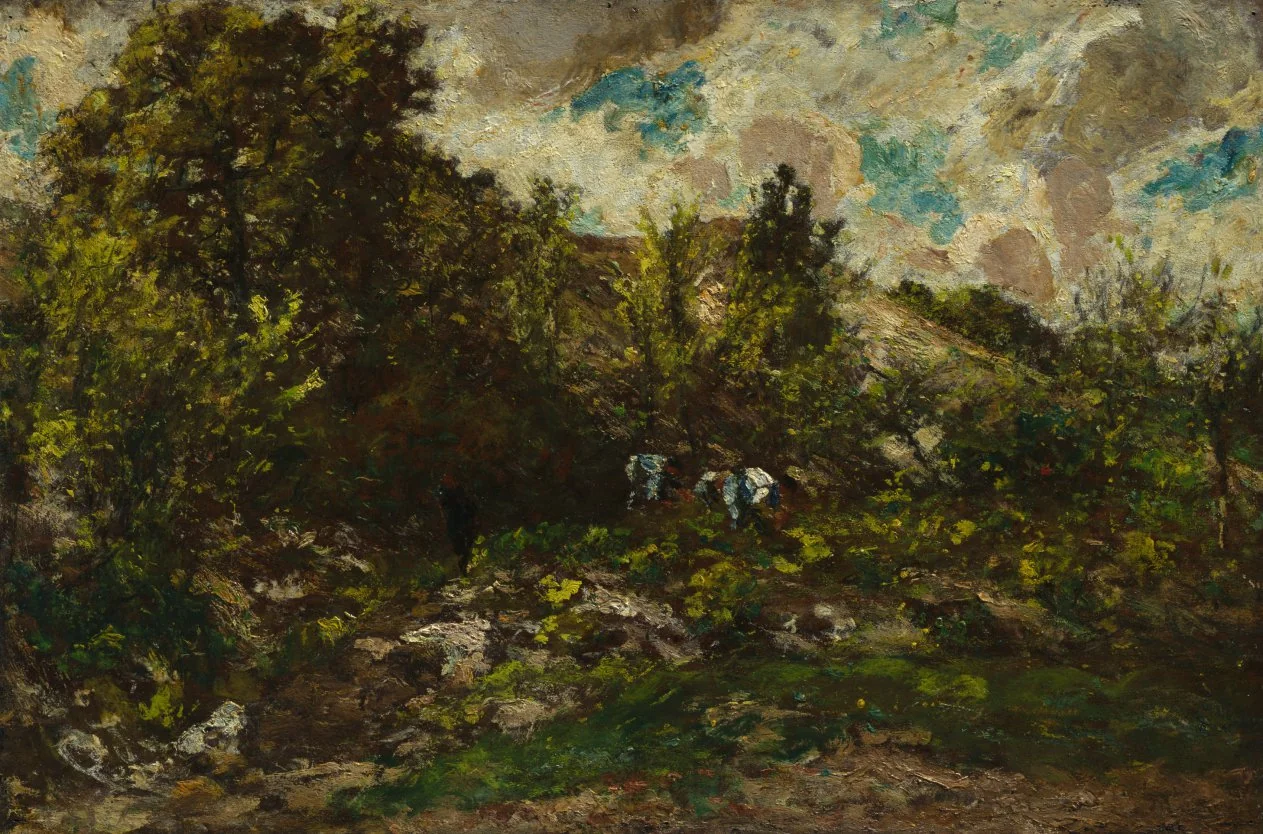
Autumn is one of Monticelli's most atmospheric landscape subjects, rendered on a wood panel that gives the paint a luminosity and warmth that canvas does not provide. The season of autumn — with its golds, browns, and russets — was ideally suited to Monticelli's rich, warm palette, and this painting exploits the seasonal color scheme to its fullest. The thick impasto creates a surface that catches and holds light, producing a glow that is both the effect of autumn light and the effect of Monticelli's paint. The small scale of the wood panel intensifies this luminosity, concentrating the seasonal atmosphere into a space that the viewer can hold in one hand.
Cultural Impact
Monticelli's seasonal paintings are among his most sought-after works because they combine the atmospheric quality of the Barbizon landscape tradition with the decorative richness that made him a favorite of collectors. Autumn, with its natural palette of gold and brown, was the perfect subject for Monticelli's brushwork: the season's colors matched his preferred palette, and the season's atmosphere matched his preferred mood of rich melancholy.
Why It Matters
Autumn is Monticelli painting in his natural key: golds and browns laid on in thick strokes that produce their own light. The wood panel support enhances the warmth, the season matches the palette, and the result is a painting that looks and feels like autumn — not a picture of the season but the season itself, translated into paint.