Accession Number
1954.832
Medium
oil on fabric
Dimensions
Framed: 74 x 123.5 x 8 cm (29 1/8 x 48 5/8 x 3 1/8 in.); Unframed: 52 x 101.6 cm (20 1/2 x 40 in.)
Classification
Painting
Credit Line
Gift of Alfred W. Kleinbaum
Tags
Painting Impressionist & Modern (1851–1900) Oil Painting French Color: Orange
Background & Context
Background Story
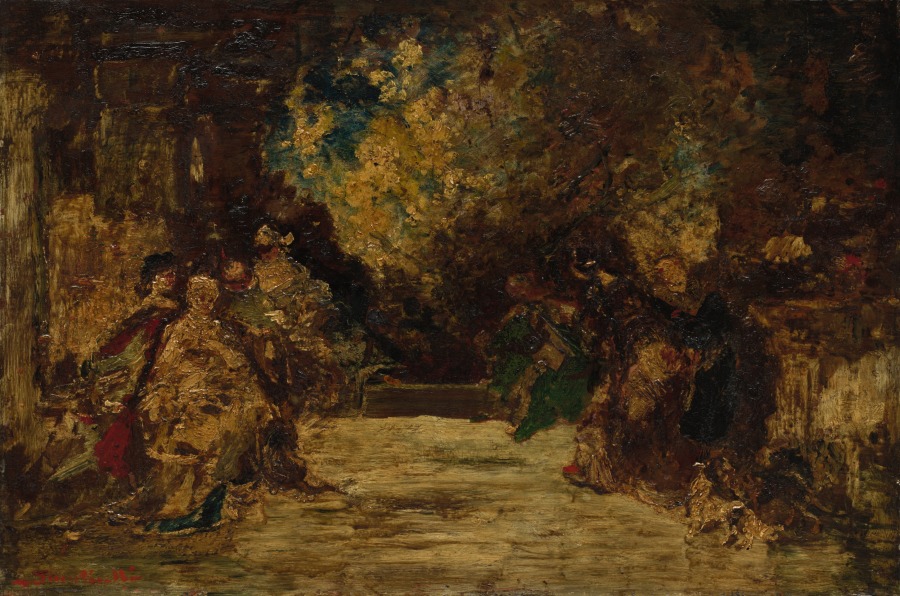
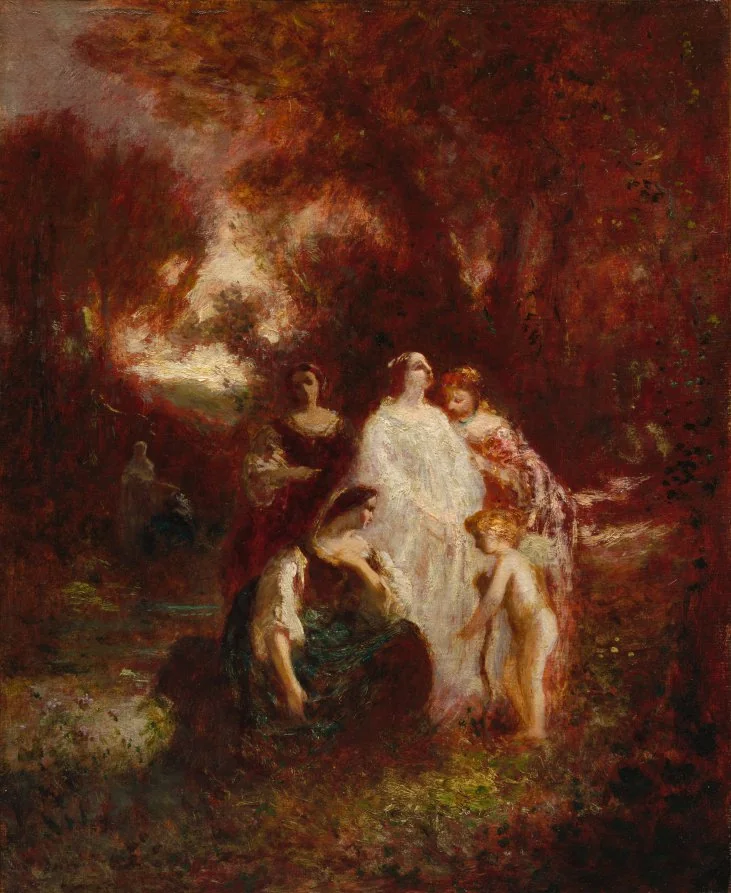
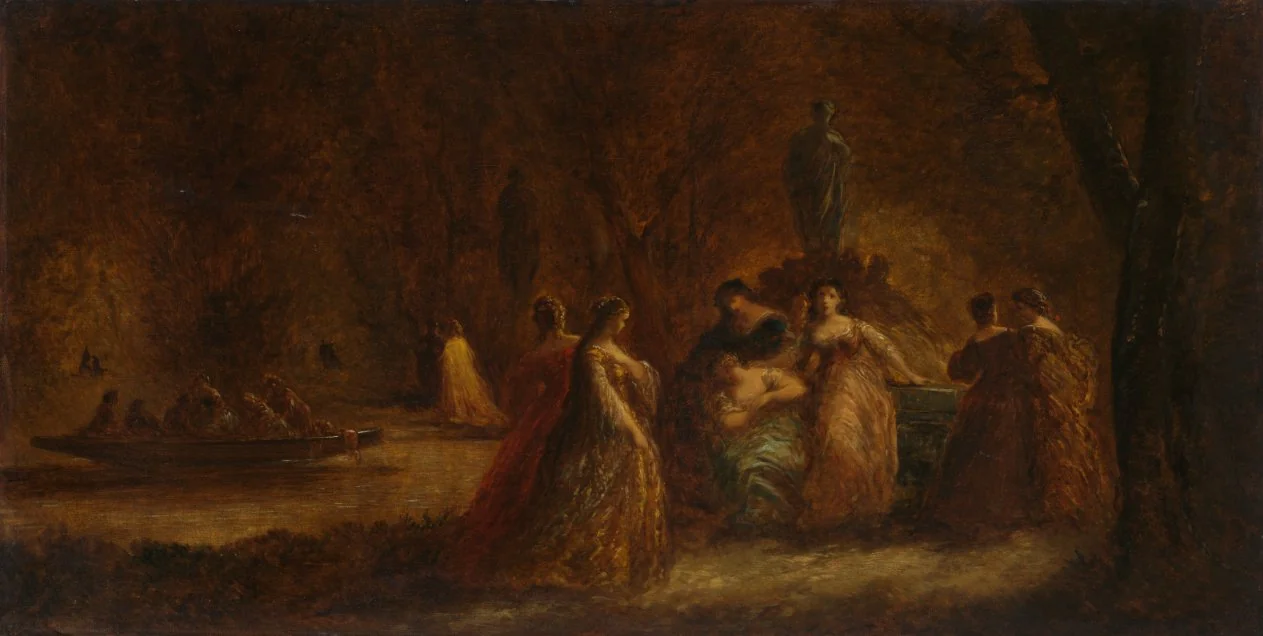
A Woodland Fête is Monticelli's most Watteau-esque subject: elegantly dressed figures gathered in a forest clearing for entertainment, conversation, and the pleasure of being outdoors. The fête champêtre — the outdoor party — was a subject with a long history in French painting, going back to Watteau's Pilgrimage to Cythera and continuing through the Rococo period to Monticelli's own time. Monticelli's treatment of the subject is characteristically rich: the figures are embedded in a landscape of thick, luminous paint that makes the fête seem like a dream of pleasure rather than an actual social event.
Cultural Impact
The fête champêtre was one of the defining subjects of French painting, and Monticelli's version connects him to the Rococo tradition that his work both continues and transforms. Where Watteau's fêtes are melancholy (the pleasure is ending), Monticelli's are voluptuous (the pleasure is continuing), and the thick, jewel-like paint turns the entire scene into a decorative object as rich and satisfying as a piece of jewelry.
Why It Matters
A Woodland Fête is Monticelli channeling Watteau through impasto: the outdoor party, the elegant figures, the forest setting — all rendered in paint so thick and rich that the pleasure of the fête and the pleasure of the paint become the same thing. The subject is French tradition; the execution is Monticelli's revolution.