Accession Number
1916.781
Medium
oil on wood
Dimensions
Unframed: 36 x 34.5 cm (14 3/16 x 13 9/16 in.)
Classification
Painting
Credit Line
Holden Collection
Tags
Painting Renaissance (1400–1599) Oil Painting Color: Gold Color: Brown
Background & Context
Background Story
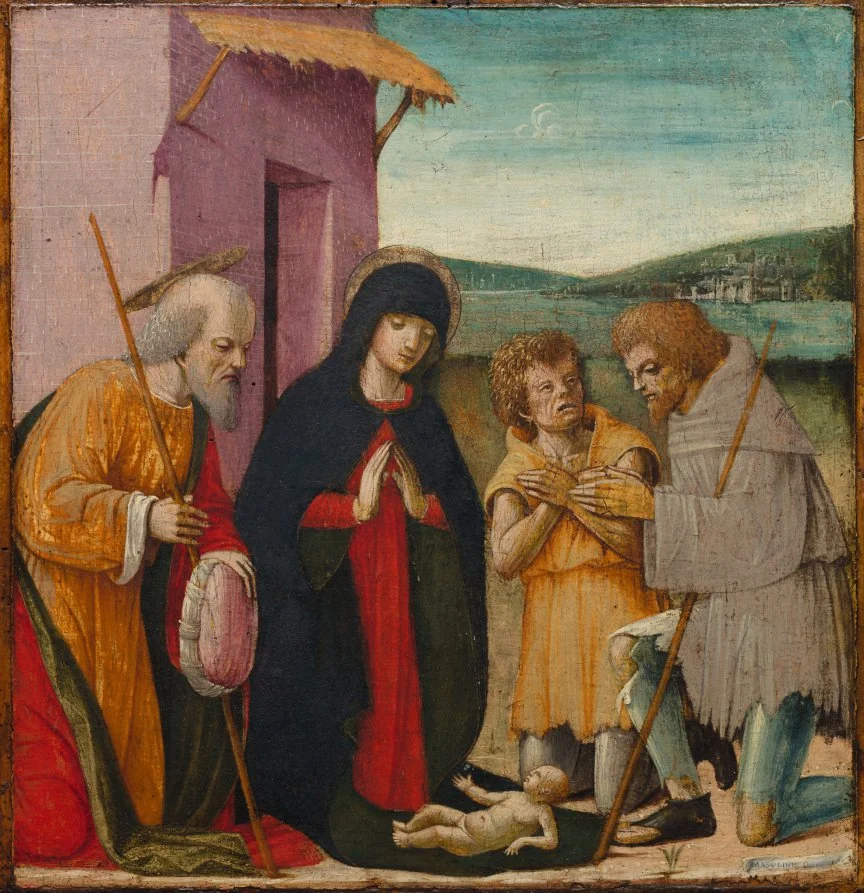
Adoration of the Shepherds, painted around 1480-1500, belongs to the tradition of Nativity painting that was one of the most important subjects in late medieval and early Renaissance Northern European art. The painting depicts the shepherds, summoned by the angels, arriving at the manger to worship the newborn Christ, their rustic simplicity contrasting with the divine significance of the event they witness.
The Adoration of the Shepherds was a subject of particular importance in Northern European painting, where the tradition of devotional realism encouraged artists to render the Nativity with a specificity and emotional directness that Italian painters, working in the more idealizing classical tradition, seldom achieved. The shepherds, rough and weathered, are painted as real peasants rather than idealized rustics, and the manger, the animals, and the landscape are rendered with a loving attention to physical detail that makes the divine event viscerally present.
The painting most distinctive quality is its treatment of light. The divine light that emanates from the Christ child illuminates the surrounding figures and objects with a supernatural brightness that contrasts with the darkness of the surrounding night. This light, which is both a natural phenomenon and a theological statement, creates a visual experience in which the viewer, like the shepherds, is drawn toward the source of illumination.
Cultural Impact
Nativity paintings of this period established the Adoration of the Shepherds as one of the most emotionally powerful subjects in Christian art and influenced the development of devotional painting throughout Northern Europe. Their combination of realism and supernatural light created a visual language for the Incarnation that shaped Christian visual culture for centuries.
Why It Matters
This painting captures the most radical claim of Christianity: that God became flesh in a stable, and that the first witnesses to this event were not priests or kings but shepherds - the poorest and most humble members of society. The shepherds wonder, illuminated by divine light, is the painting central truth and its most enduring legacy.