Provenance
Mrs. R. Henry Norweb [1895-1984], Cleveland, OH (?-1954); The Cleveland Museum of Art, Cleveland, OH (December 4, 1954-)
Accession Number
1954.662
Medium
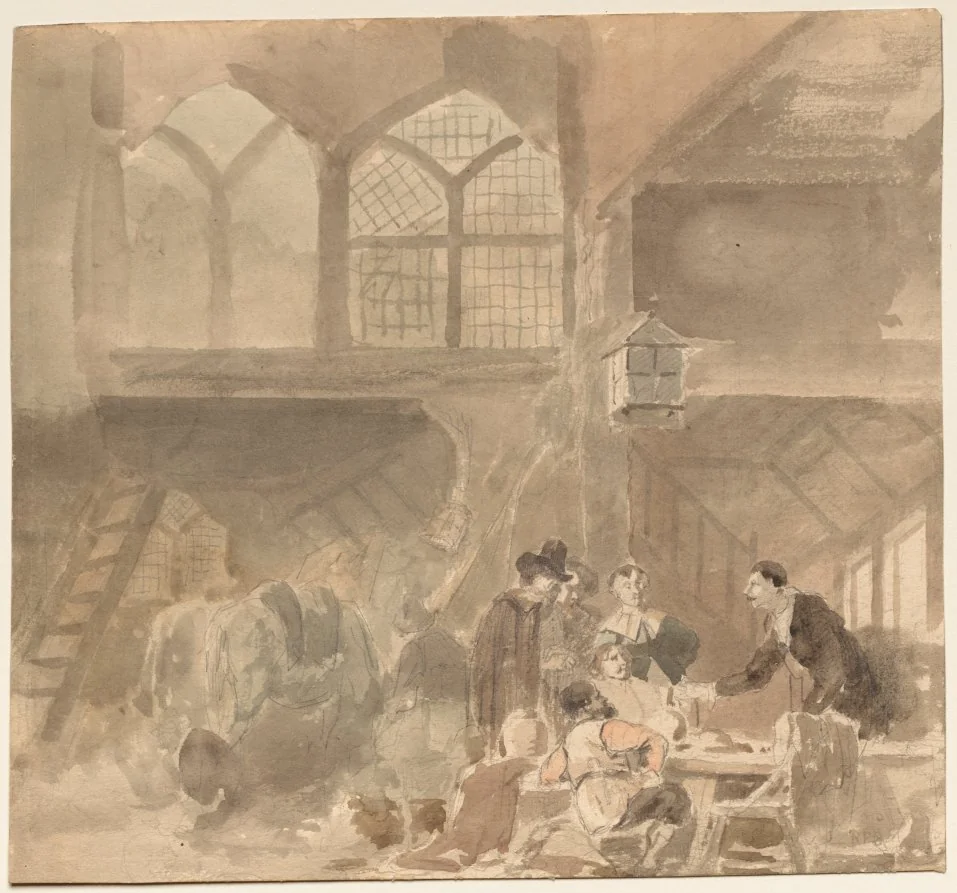
watercolor and graphite
Dimensions
Sheet: 25.2 x 27.3 cm (9 15/16 x 10 3/4 in.)
Classification
Drawing
Credit Line
The Norweb Collection
Tags
Drawing Neoclassical & Romantic (1751–1850) Watercolor Graphite & Pencil Color: White Color: Gray
Background & Context
Background Story
Interior of an Inn, dating from the 1800s and attributed to an unknown artist, depicts a subject that was enormously popular in European painting from the seventteenth century onward. The inn interior, with its blend of social interaction, rustic charm, and narrative potential, attracted artists across the Dutch, Flemish, and English traditions. Inns served as vital social hubs in pre-industrial Europe—places where travelers rested, merchants conducted business, locals gathered for news and companionship, and communities celebrated. As a painting subject, the inn interior allowed artists to showcase their skill at rendering interior light, varied textures from rough wood to polished tankards, and the full range of human expression from conviviality to solitude. The unknown artist of this work operated within established conventions that included low ceilings, warm color palettes, and compositions organized around central figures engaged in drinking, smoking, or conversation. The 1800s date places this work during a period when the traditional inn was beginning to change character—improved roads and the coming of the railways would transform these institutions, making paintings of traditional inns increasingly nostalgic documents of a disappearing way of life. The anonymity of the artist adds an additional layer of interest, reminding us that much of the period's most characteristic imagery was produced by skilled professionals whose names have been lost to history.
Cultural Impact
Inn interior paintings document the social fabric of pre-industrial European communities, preserving visual records of spaces that served as essential hubs for travel, commerce, and community life.
Why It Matters
This anonymous work preserves a record of everyday European social life in spaces that would be transformed by industrialization, embodying genre painting traditions that valued ordinary experience.