Description
This oil sketch was probably made on a trip through Massachusetts in the summer of 1853.
Provenance
(New York sale 1972)
Accession Number
1977.118
Medium
oil on board
Dimensions
Framed: 52.4 x 43.6 x 6.7 cm (20 5/8 x 17 3/16 x 2 5/8 in.); Unframed: 33.9 x 23.9 cm (13 3/8 x 9 7/16 in.)
Classification
Painting
Credit Line
Gift of Mr. and Mrs. Noah L. Butkin
Tags
Painting Impressionist & Modern (1851–1900) Oil Painting Board American Color: Green Color: Gray
Background & Context
Background Story
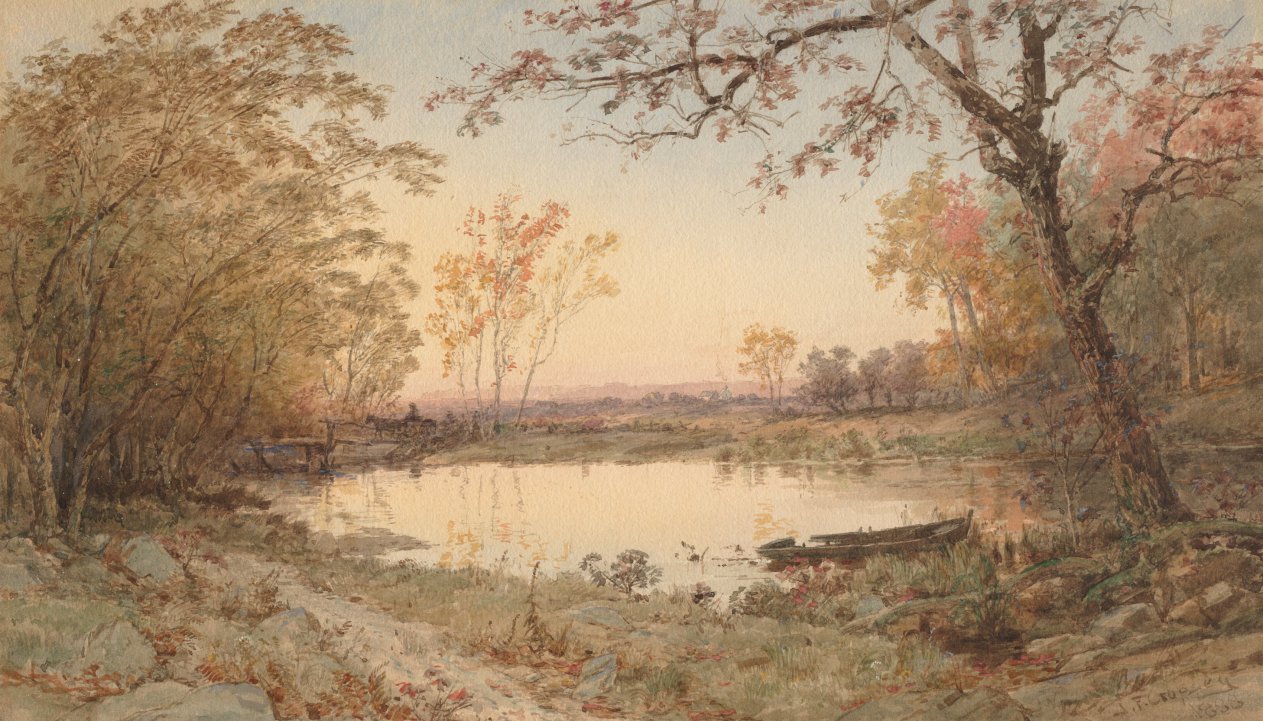
Trees and a Stream on a Hillside (1853) represents the intimate dimension of Cropsey's landscape practice—the quieter subjects that balanced his more dramatic mountain vistas. The painting depicts a specific hillside, likely in the Hudson Valley, with trees and a stream providing the compositional elements that create visual interest without the spectacular effects of Cropsey's autumn and mountain scenes. The year 1853 places this during Cropsey's most productive period, when he was alternating between ambitious exhibition pieces and smaller, more intimate landscapes for the market. The intimate landscape tradition in American painting—less dramatic than the grand wilderness vision but equally committed to the specific character of American places—found accomplished expression in Cropsey's work. The trees, rendered with the attention to species and seasonal condition that distinguishes good landscape painting, provide vertical structure and compositional rhythm. The stream, cutting through the hillside and creating a diagonal that energizes the composition, connects the foreground detail to the distant vista that Hudson River School compositions typically include. The painting demonstrates that Cropsey's gifts were not limited to autumn colorism—his understanding of landscape structure, his handling of atmospheric perspective, and his integration of detail and effect served quieter subjects as effectively as dramatic ones.
Cultural Impact
Cropsey's intimate landscape paintings influenced the American tradition of small-scale landscape painting, demonstrating that the Hudson River School's principles could serve modest subjects as well as grand ones. The paintings influenced later Tonalist and Impressionist American landscape painters who similarly found subjects in gentle, local terrain. The hillside-stream subject influenced how American pastoral landscape was represented in art.
Why It Matters
This painting matters because it reveals the range and depth of Hudson River School practice beyond its most dramatic and famous examples. Cropsey's Trees and a Stream demonstrates that the School's commitment to American landscape extended to humble as well as spectacular places—and that its artistic principles were robust enough to serve any subject, not just the mountain vistas and autumn panoramas that defined its popular reputation.