Description
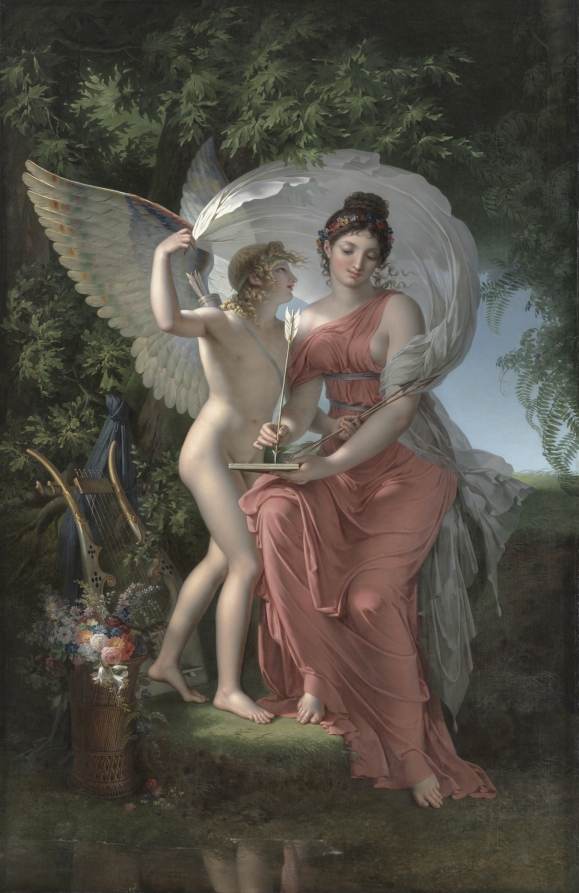
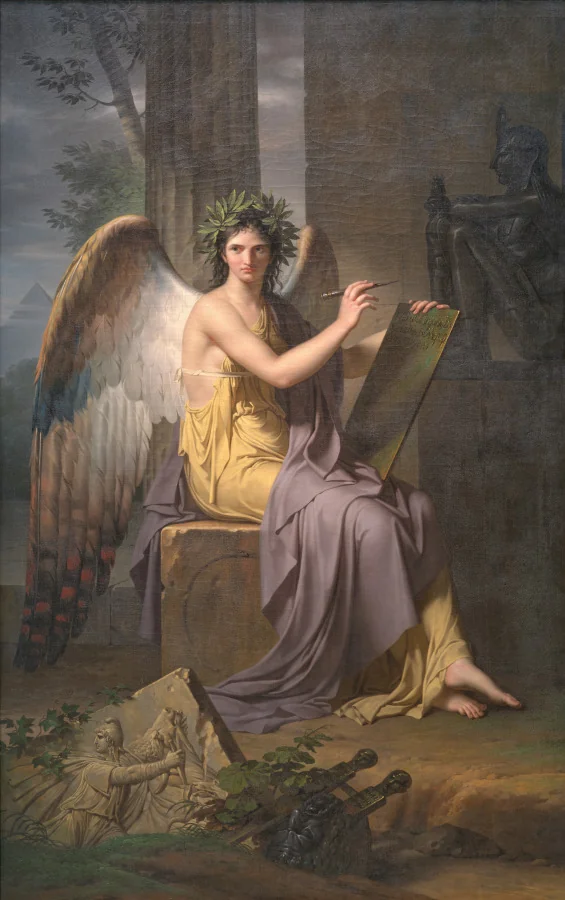
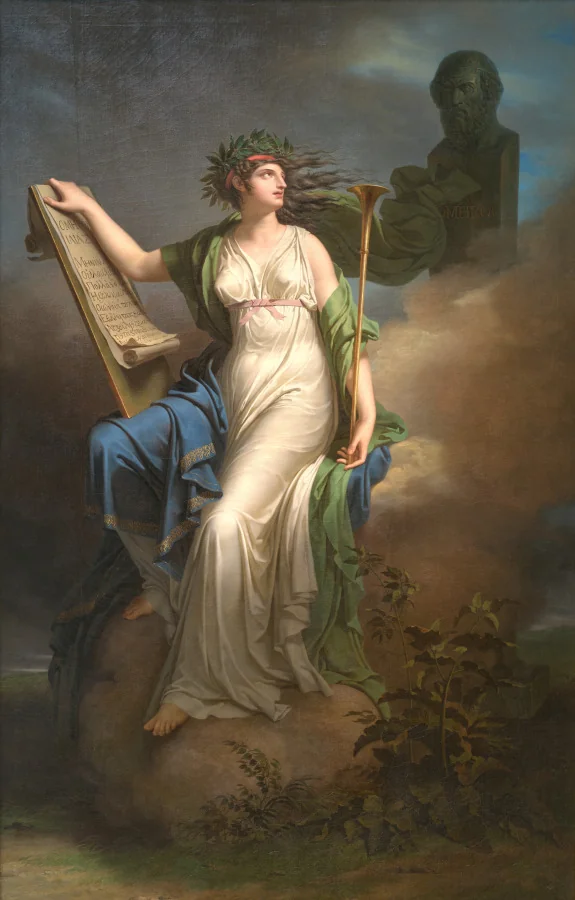
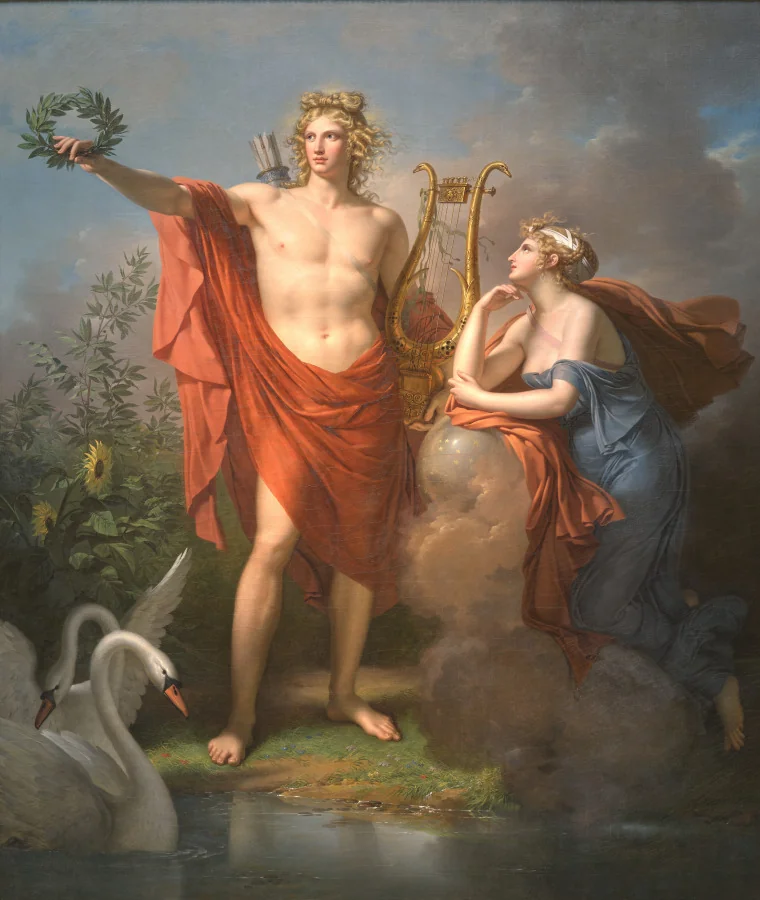
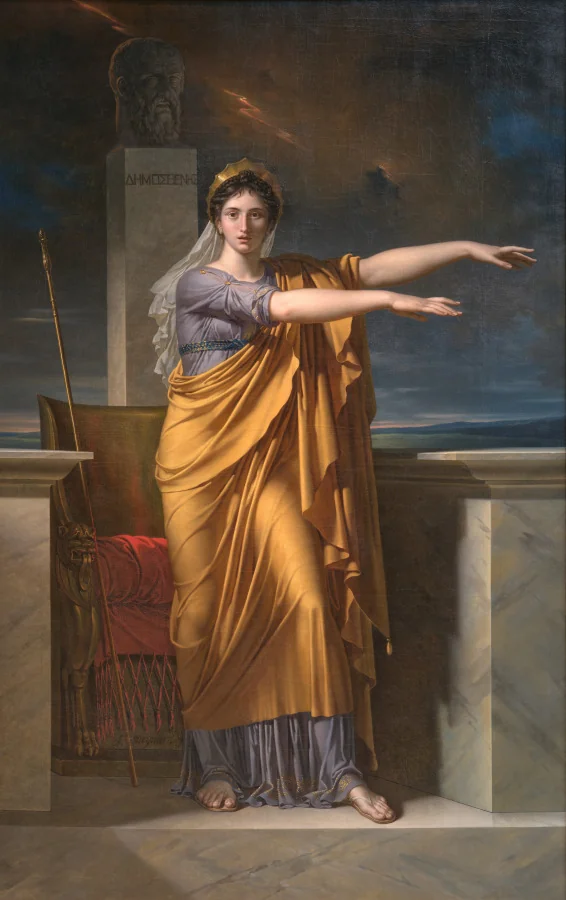
Polymnia is one of the nine muses in Greek mythology and a patron of dancing or geometry. She is portrayed here standing in front of a bust of the Athenian orator Demosthenes. This painting belongs to a cycle of five works commissioned by businessman François Boyer-Fonfréde for his home in Toulouse.
Provenance
In 1819, Nicolas-Antoine de Castella, general of the Swiss regiments in France, purchased the paintings and placed them in his Castle of Wallenreid, Switzerland; direct descendants; Pierre de Castella, Mannaz, Switzerland.
Accession Number
2003.6.1
Medium
oil on canvas
Dimensions
Overall: 275 x 177 cm (108 1/4 x 69 11/16 in.)
Classification
Painting
Credit Line
Severance and Greta Millikin Purchase Fund
Tags
Painting Neoclassical & Romantic (1751–1850) Oil Painting Canvas French Color: Orange
Background & Context
Background Story
Charles Meynier (1768-1832) was a French Neoclassical painter who specialized in mythological and allegorical subjects during the Napoleonic and Restoration periods. Polyhymnia, the Muse of Eloquence (also associated with sacred poetry and mime), is one of a series of Muse paintings that Meynier executed around 1800, depicting the nine muses of Greek mythology with the formal clarity and idealized beauty of the Neoclassical style. Polyhymnia's pose, expression, and attributes are chosen to convey the quality of eloquent speech — the raised hand suggesting gesture, the contemplative expression suggesting thought, and the flowing drapery suggesting the rhetorical flow of well-constructed argument.
Cultural Impact
Meynier's Muse series was created during a period when Neoclassical art was being adapted to serve Napoleonic propaganda — the muses representing the cultural aspirations of the new regime as clearly as the classical heroes represented its military ambitions. Polyhymnia, the muse of eloquence, was particularly relevant to a period when public speaking and rhetorical skill were essential tools of political power.
Why It Matters
Polyhymnia is Meynier's Neoclassicism at its most refined: a single figure, idealized beauty, and an attribute system that makes the abstract concept of eloquence visible. The muse is not a portrait of a woman but an embodiment of a quality — and Meynier's task is to make that quality tangible through pose, expression, and drapery.