Description
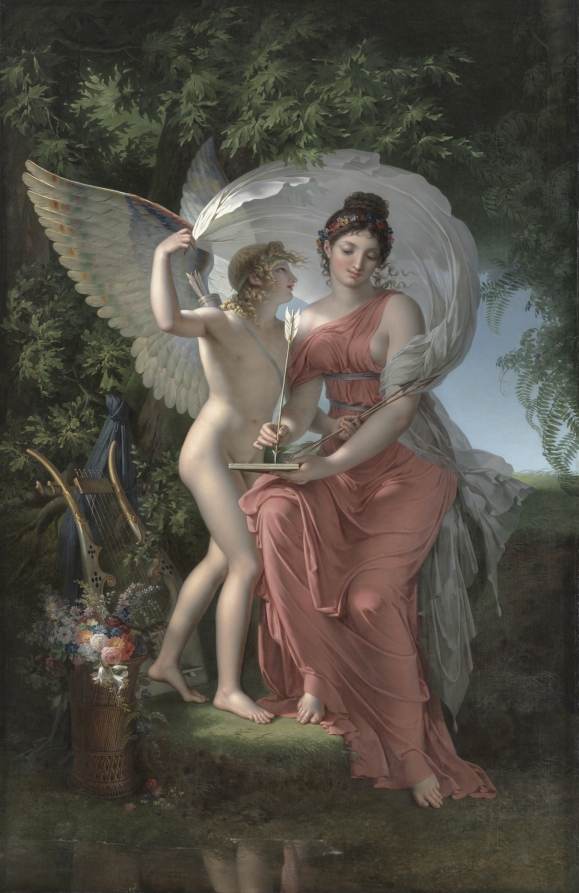
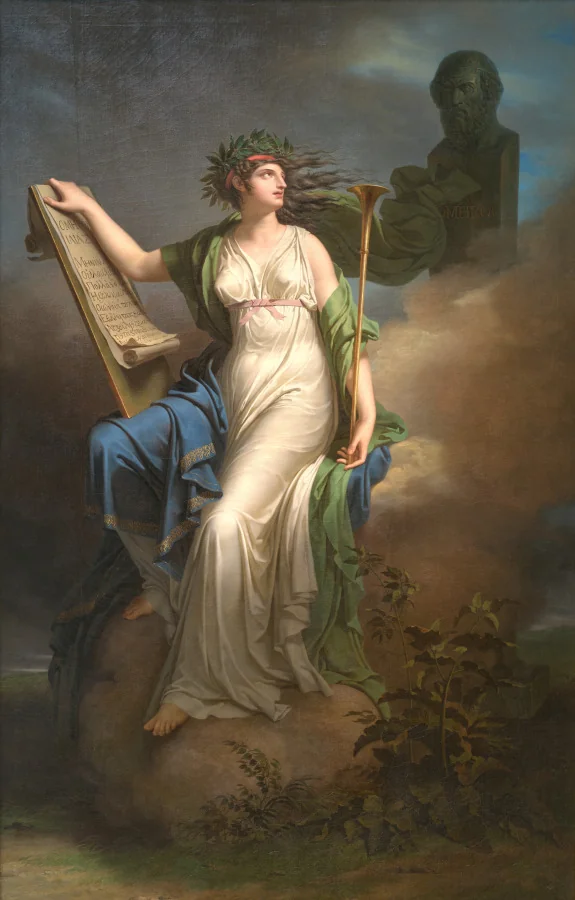
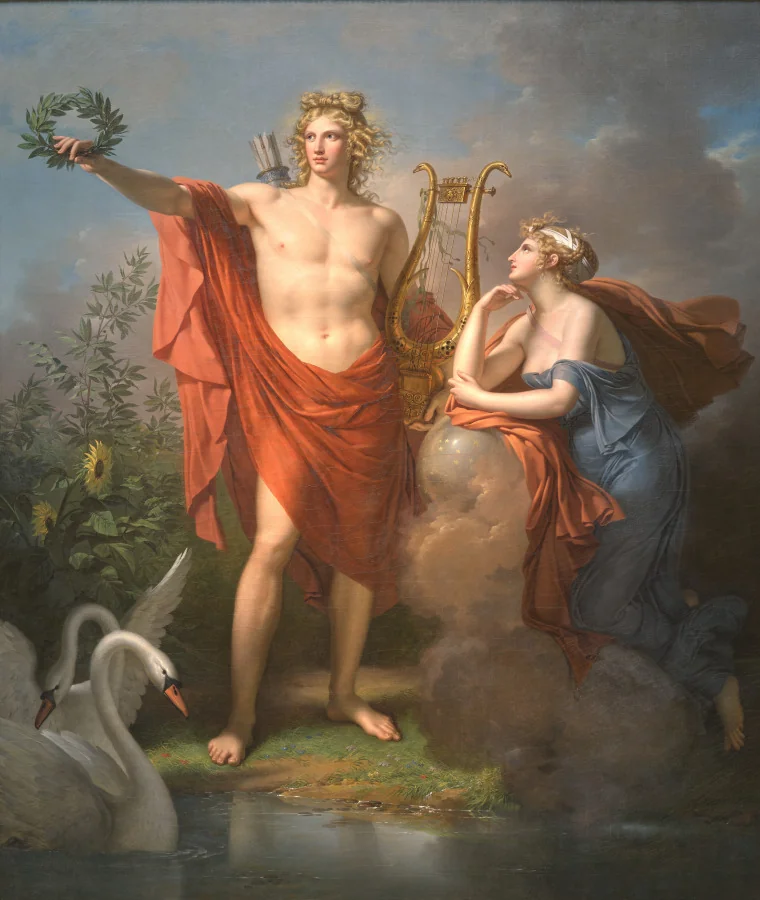
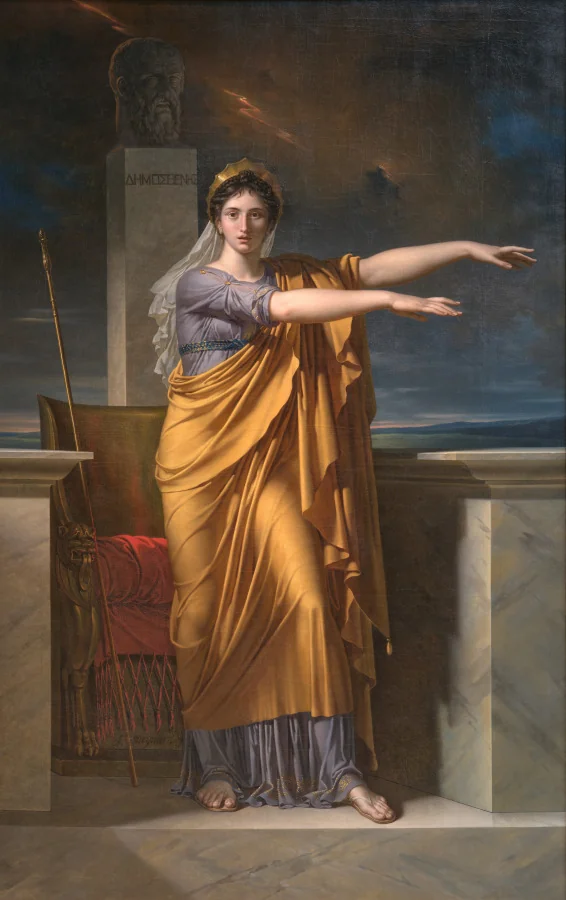
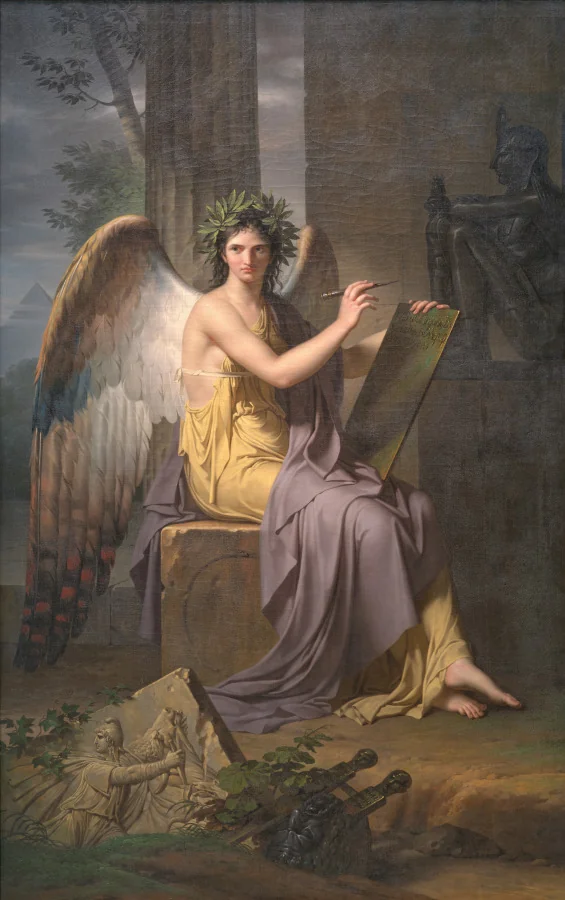
Clio, the Greek muse of history, is the daughter of Zeus and Titaness Mnemosyne, the goddess of memory. Clio is depicted here writing and surrounded by objects associated with preserving the memory of historical figures and events: busts, reliefs, and sculptures. This painting belongs to a cycle of works commissioned by businessman François Boyer-Fonfréde for his home in Toulouse.
Provenance
In 1819, Nicolas-Antoine de Castella, general of the Swiss regiments in France, purchased the paintings and placed them in his Castle of Wallenreid, Switzerland; direct descendants; Pierre de Castella, Mannaz, Switzerland.
Accession Number
2003.6.5
Medium
oil on canvas
Dimensions
Framed: 290 x 192.4 x 7 cm (114 3/16 x 75 3/4 x 2 3/4 in.); Unframed: 273 x 176 cm (107 1/2 x 69 5/16 in.)
Classification
Painting
Credit Line
Severance and Greta Millikin Purchase Fund
Tags
Painting Neoclassical & Romantic (1751–1850) Oil Painting Canvas French Color: Gold Color: Brown
Background & Context
Background Story
Clio, the muse of history, is depicted by Meynier with the attributes that tradition assigns her: the scroll or book that records events, and the laurel wreath that crowns great achievement. As the muse of history, Clio had a particular resonance in the France of 1800, a nation that was acutely conscious of making history and equally conscious of the need to record and interpret it. Meynier's Neoclassical treatment gives Clio the gravity and authority appropriate to the muse who presides over the most consequential form of writing — the writing that determines how events will be remembered.
Cultural Impact
The choice of Clio as a subject in 1800 was not merely conventional. France was in the process of creating a new historical narrative — one that incorporated the Revolution, the Directory, and the emerging Consulate into a coherent story. Clio, as the muse of history, was the divine patron of this project, and Meynier's painting participates in the creation of the historical mythology that would sustain the Napoleonic regime.
Why It Matters
Clio is Meynier's most politically relevant muse: the patron of history, painted at a moment when France was making history faster than it could record it. The muse's scroll and laurel are not just attributes — they are the tools of a nation that understands that whoever writes history controls it.