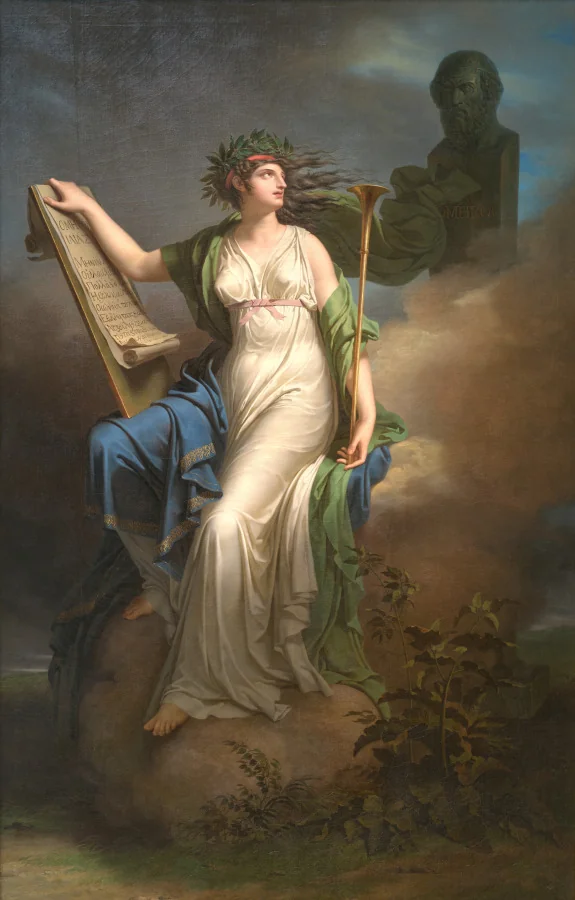
Description
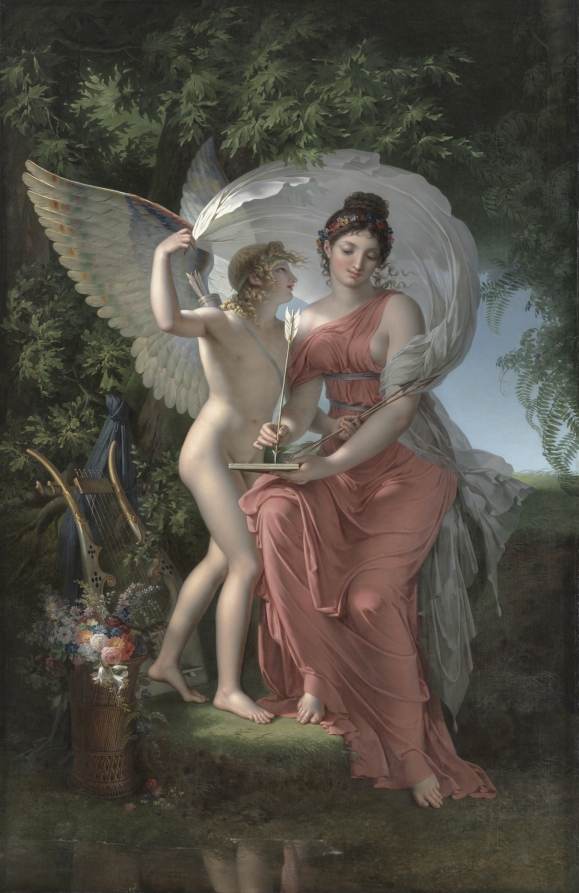
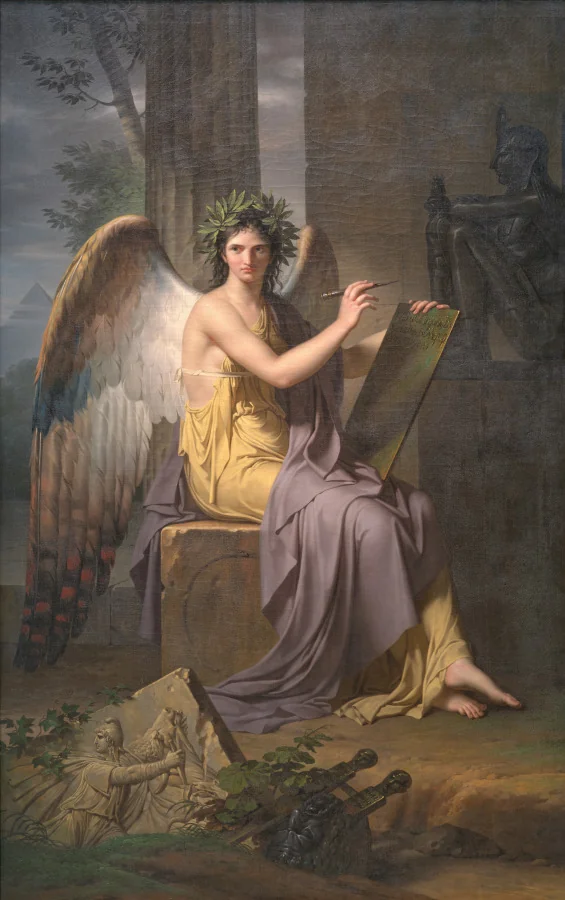
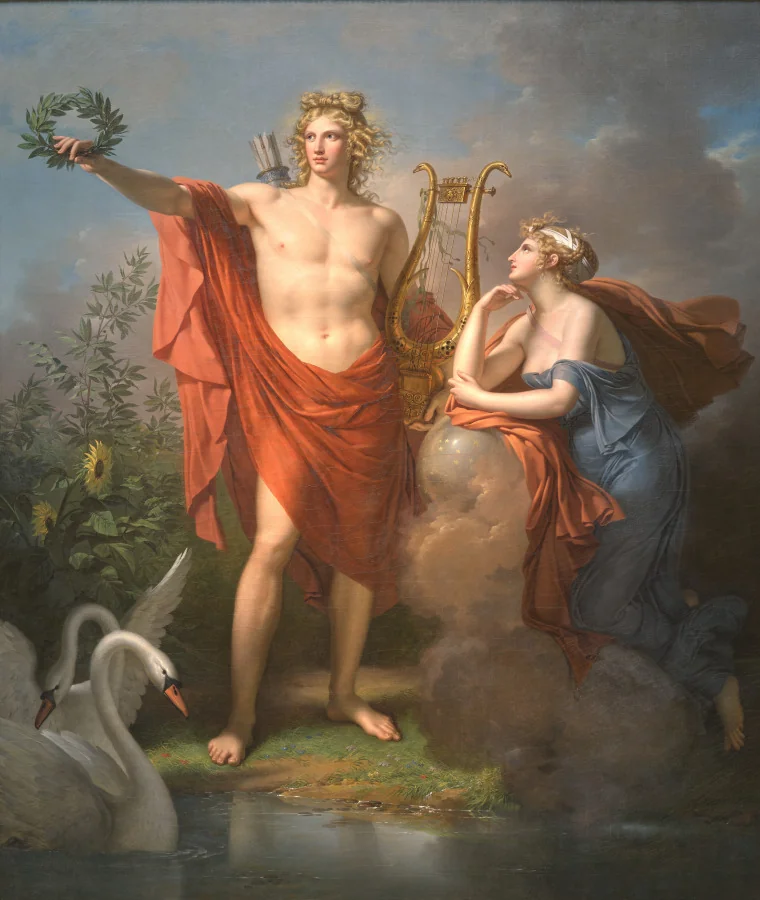
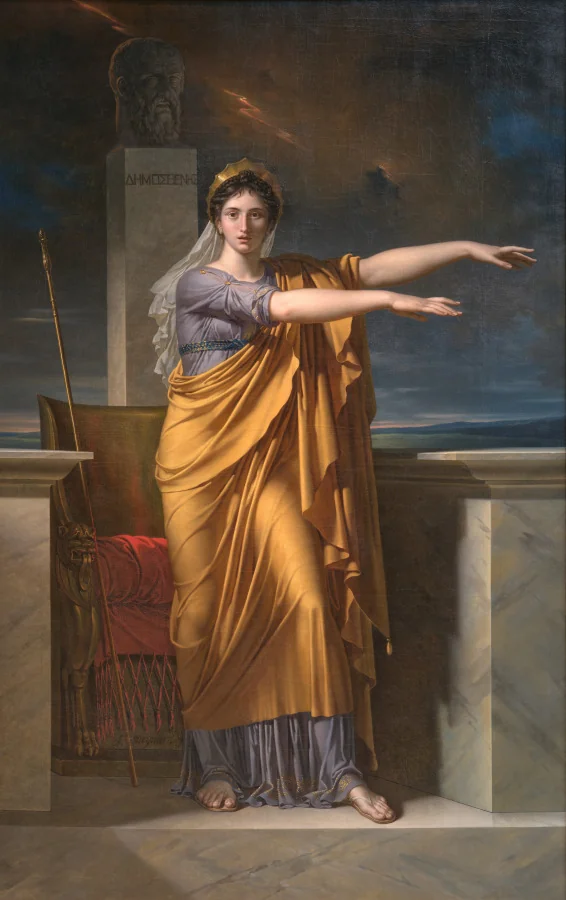
The eldest of the nine Greek muses, Calliope was the goddess of music, song, and dance. She was also known as the goddess of epic poetry and conferred the gift of eloquence on kings and princes. She stands here before a bust of Homer, the ancient Greek poet who wrote the Odyssey and the Iliad. This painting belongs to a cycle of five works commissioned by businessman François Boyer-Fonfréde for his home in Toulouse.
Provenance
In 1819, Nicolas-Antoine de Castella, general of the Swiss regiments in France, purchased the paintings and placed them in his Castle of Wallenreid, Switzerland; direct descendants; Pierre de Castella, Mannaz, Switzerland.
Accession Number
2003.6.4
Medium
oil on canvas
Dimensions
Overall: 275 x 177 cm (108 1/4 x 69 11/16 in.)
Classification
Painting
Credit Line
Severance and Greta Millikin Purchase Fund
Tags
Painting Neoclassical & Romantic (1751–1850) Oil Painting Canvas French Color: Orange Color: Gold
Background & Context
Background Story
Calliope, the chief of the nine muses and the patron of epic poetry, is depicted by Meynier with the attributes of her office — the scroll, the tablet, or the stylus that signify the writing of heroic verse. As the muse of the most prestigious form of poetry in the Greek tradition, Calliope occupies the highest position in the hierarchy of the muses, and Meynier's depiction reflects her status: the pose is more authoritative, the expression more commanding, and the drapery more classical than the lesser muses. The date of 1798 places this painting in the Directory period, when Neoclassical art was shifting from Revolutionary imagery to a more stable form of cultural propaganda.
Cultural Impact
Epic poetry was the most revered form of literature in the classical tradition, and Calliope's position as its muse gave her a cultural prestige that Meynier's painting reflects. In the context of the late 1790s, when France was between the Revolution and the Napoleonic Empire, the muse of epic poetry had a particular relevance: the new regime needed heroic narratives, and Calliope was their divine patron.
Why It Matters
Calliope is Meynier's most authoritative muse: the chief of the nine, the patron of epic poetry, depicted with the dignity and command that her rank demands. In a period between Revolution and Empire, the muse of heroic narrative had particular relevance — France needed stories, and Calliope was their source.