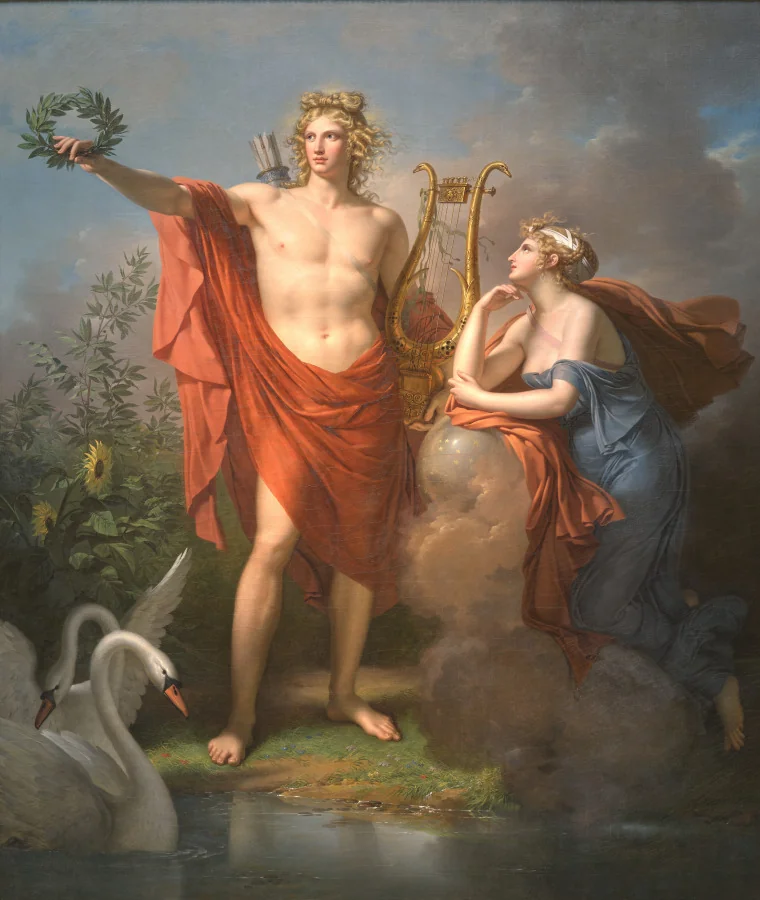
Description
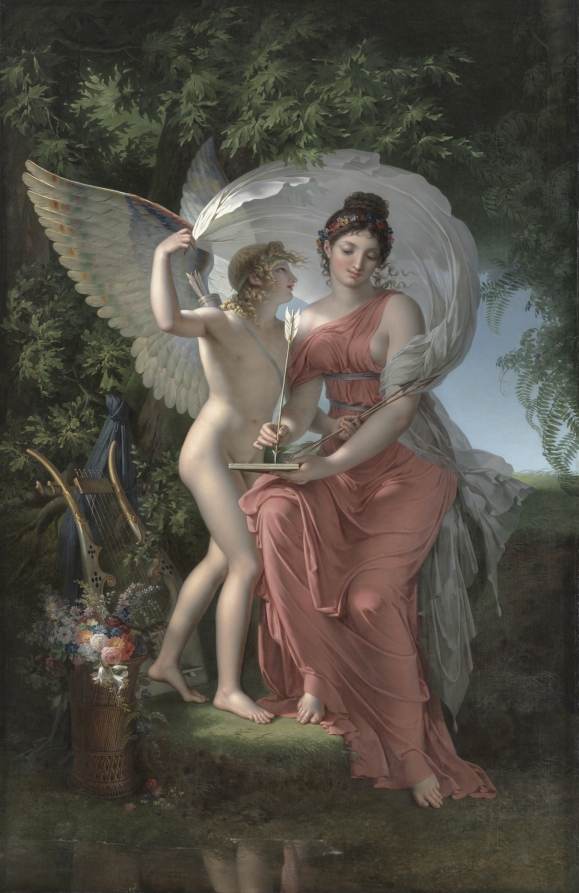
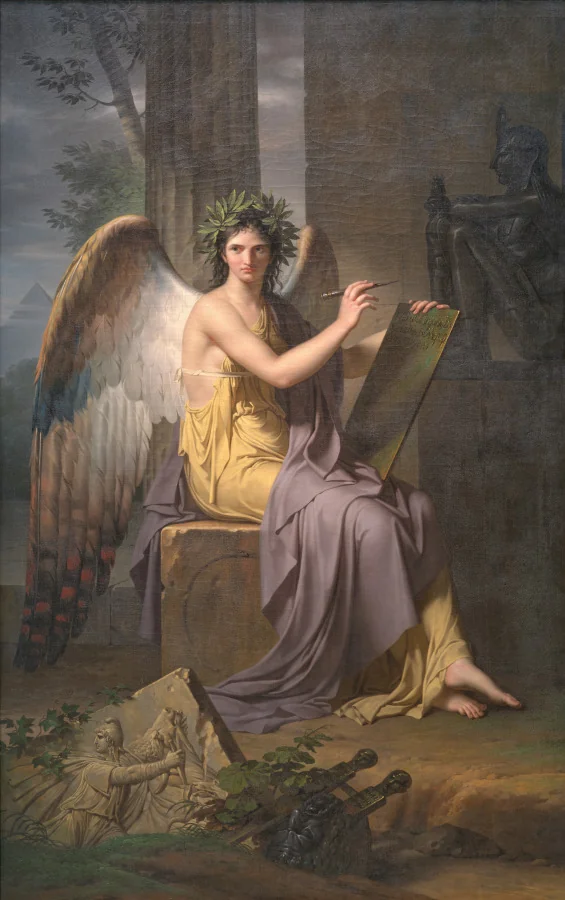
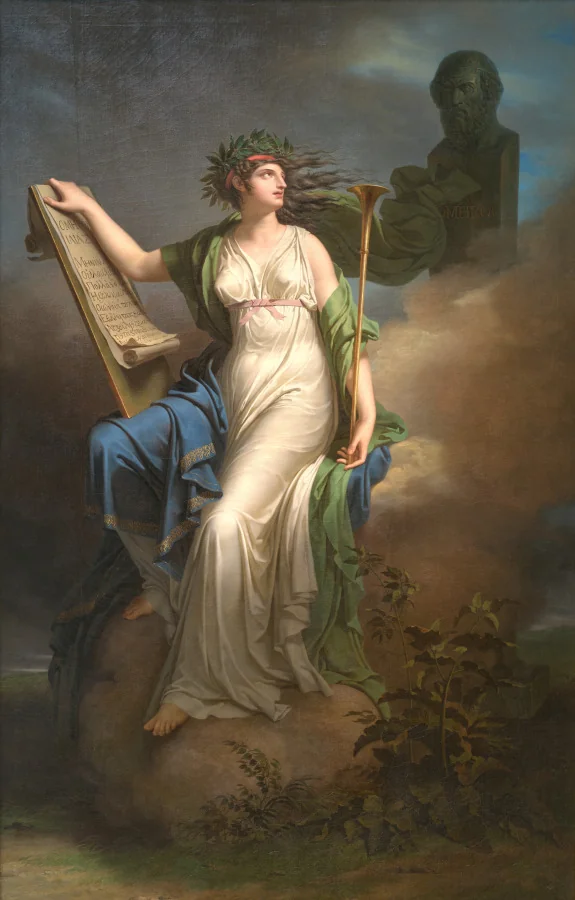
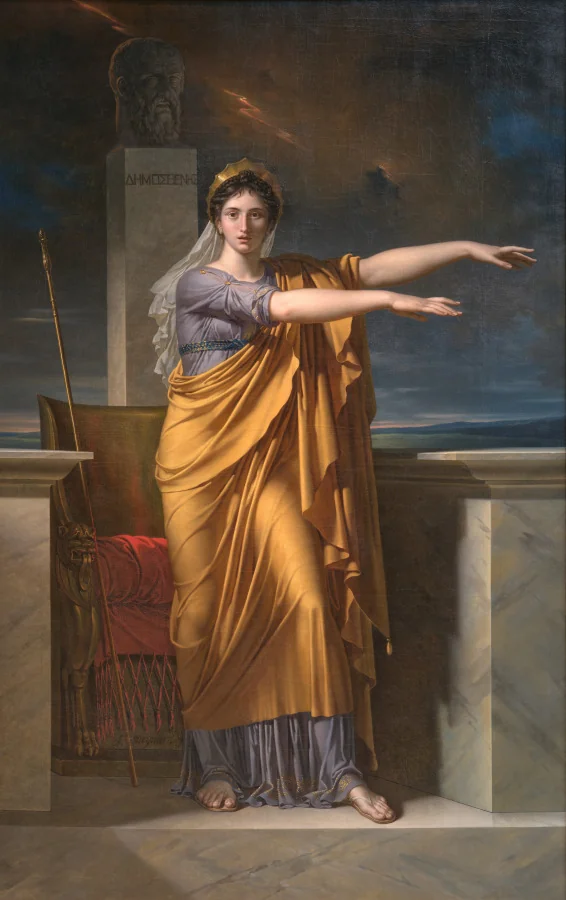
A recipient of the Grand Prix de Rome in 1789, Charles Meynier became a member of the Académie des Beaux-Arts in 1815 and painted large ceiling decorations at the Louvre and numerous pictures glorifying the Napoleonic legend. Erato, Muse of Lyrical Poetry belongs to a cycle of five paintings executed to fulfill a commission from businessman François Boyer-Fonfréde. They were intended to decorate his home in his native Toulouse and constitute a rare instance of a complete cycle of major paintings that remain intact rather than being split up and separately dispersed.
Provenance
In 1819, Nicolas-Antoine de Castella, general of the Swiss regiments in France, purchased the paintings and placed them in his Castle of Wallenreid, Switzerland.; direct descendants; Pierre de Castella, Mannaz, Switzerland; The Cleveland Museum of Art, Cleveland, OH (2003-)
Apollo, God of Light, Eloquence, Poetry, and the Fine Arts with Urania, Muse of Astronomy
1798
Accession Number
2003.6.3
Medium
oil on canvas
Dimensions
Overall: 275 x 235 cm (108 1/4 x 92 1/2 in.)
Classification
Painting
Credit Line
Severance and Greta Millikin Purchase Fund
Tags
Painting Neoclassical & Romantic (1751–1850) Oil Painting Canvas French Color: Orange
Background & Context
Background Story
This double composition — Apollo with Urania — pairs the god of the arts with the muse of astronomy, creating a dialogue between creative inspiration and mathematical knowledge that was central to Neoclassical thought. Apollo, as the god of light, eloquence, poetry, and the fine arts, represents the illuminating power of reason and beauty; Urania, as the muse of astronomy, represents the mathematical order that underlies the cosmos. Together they embody the Neoclassical ideal of the unity of art and science, beauty and knowledge, which was the intellectual foundation of the Enlightenment and the cultural foundation of the French Academy.
Cultural Impact
The pairing of Apollo and Urania was a specifically Neoclassical subject: the Enlightenment valued both artistic inspiration and scientific knowledge, and the pairing of the god of the arts with the muse of astronomy symbolized their unity. Meynier's painting was created during the Directory period, when the ideals of the Enlightenment were being redirected from Revolution to a new regime that valued both cultural refinement and scientific progress.
Why It Matters
Apollo with Urania is Meynier's Enlightenment made visible: the god of the arts illuminating the muse of astronomy, beauty joining hands with knowledge. The pairing embodies the Neoclassical conviction that art and science are not opponents but partners in the project of understanding the world.