Accession Number
13577
Medium
Pen and brown ink, with graphite on tan wove paper
Dimensions
31.3 × 23.4 cm (12 3/8 × 9 1/4 in.)
Classification
pen and ink drawings
Credit Line
Gift of Robert Allerton
Background & Context
Background Story
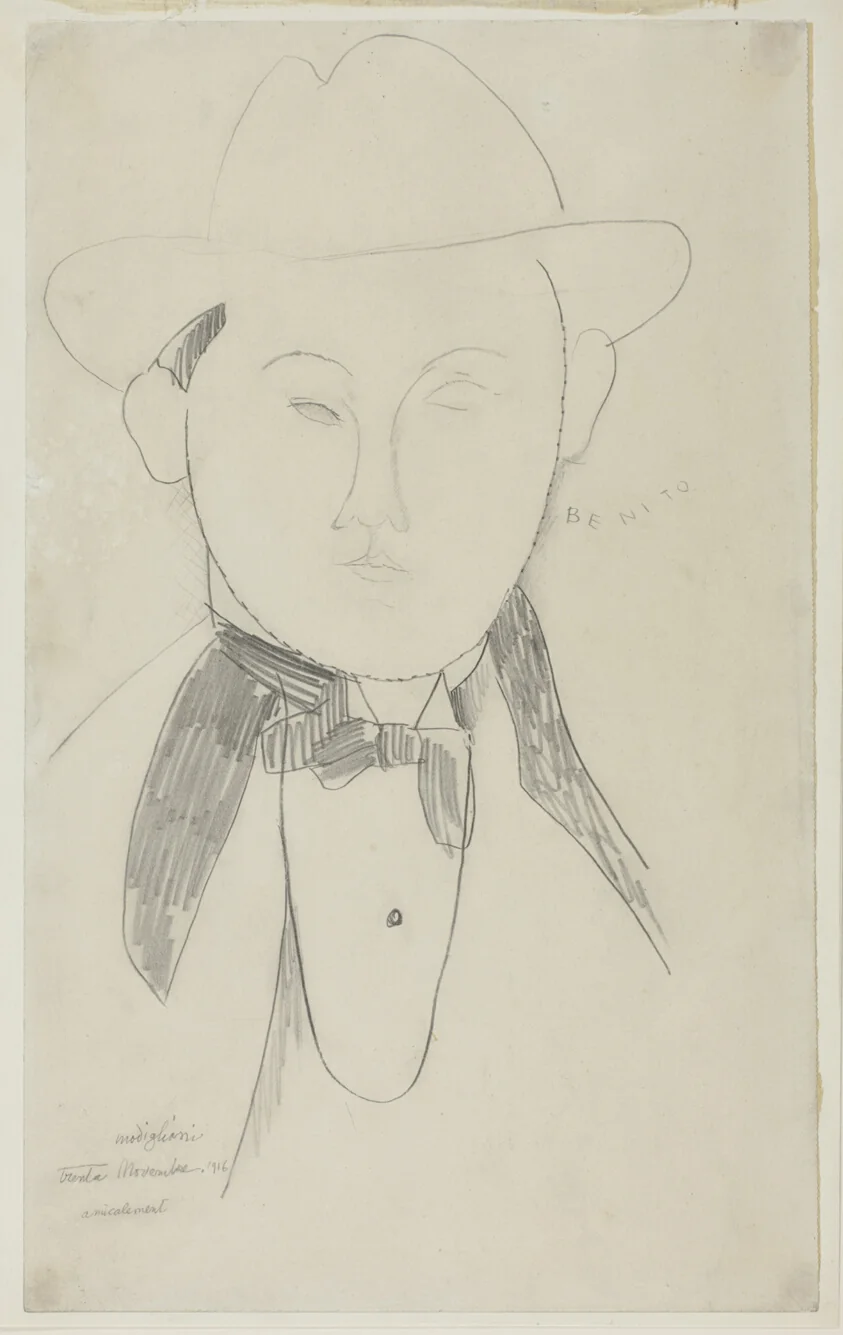
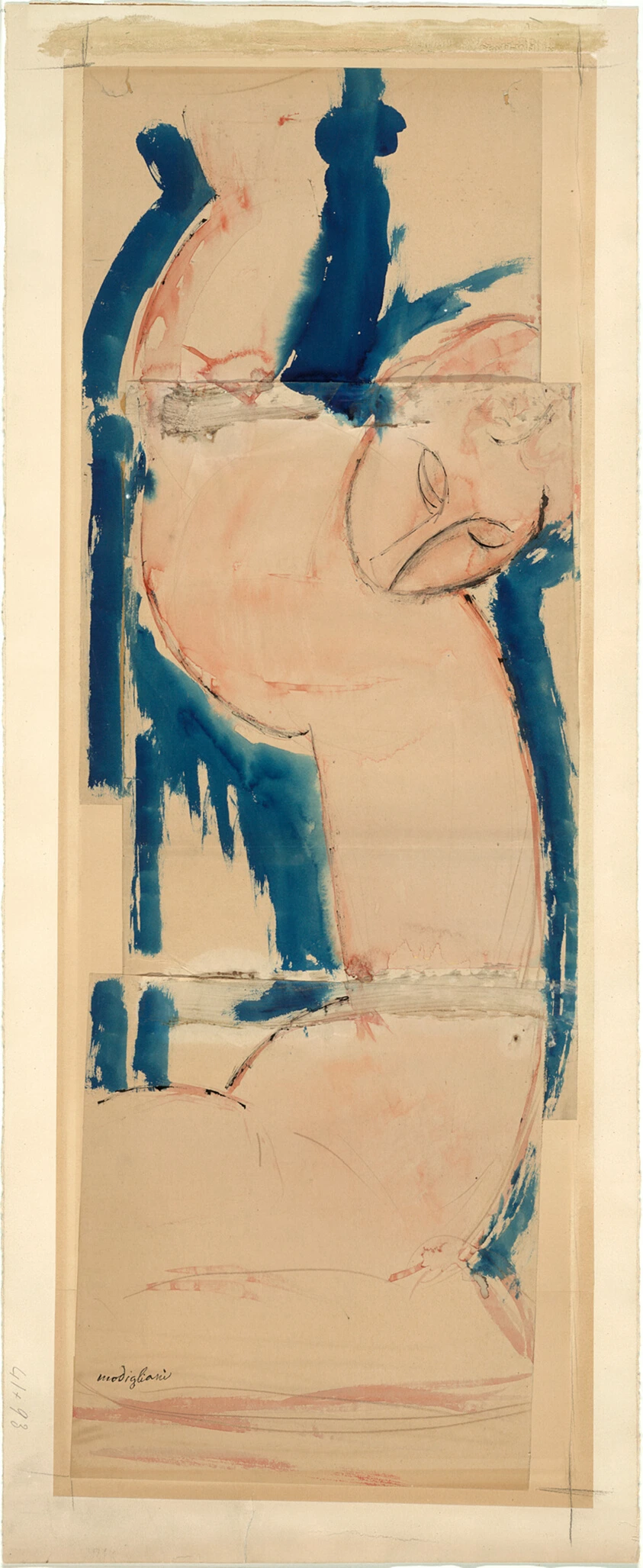
"Head of Anatolia" is one of Amedeo Modigliani's most elegant and enigmatic drawings, executed in pen and brown ink with graphite on tan wove paper during the period when the Italian artist was living in Paris and absorbing the influences of African art, Cubism, and his own Mediterranean heritage into a personal style of elongated forms and mask-like faces. The title suggests a geographical origin—Anatolia, the Asian portion of modern Turkey—but the image itself is more abstract, a stylized head that combines the almond eyes and narrow nose of Modigliani's characteristic portrait style with a severity and monumentality that suggests ancient sculpture rather than contemporary observation. The technique is extraordinarily refined: the pen lines are controlled and deliberate, creating contours that are both fluid and architectural, while the graphite underdrawing provides structural support that remains visible in places, revealing the artist's process of building form from geometry to expression. The brown ink on tan paper creates a warm, unified tonal field that makes the drawing feel like an object carved from a single material, a unified aesthetic experience that transcends the traditional distinction between line and ground. Art historians have connected this drawing to the broader tradition of primitivism in modern art, from Picasso's African masks to the ethnographic interests of the German Expressionists, noting that Modigliani's treatment is more lyrical, less aggressive than these contemporaries. The work also reflects the artist's personal history: born in Livorno to a Sephardic Jewish family, Modigliani's engagement with Mediterranean and Near Eastern antiquity was not merely aesthetic but also an expression of cultural identity and historical memory.
Cultural Impact
This drawing combined primitivist African-Cubist influences with Mediterranean monumentality, using warm brown-ink unity to make stylized Anatolian features feel carved from single material continuity.
Why It Matters
It matters because Modigliani drew a head and made it look like it had been waiting for centuries—proving that even a line on paper could feel like stone if the eyes were almond enough.