Provenance
James Jackson Jarves (1884 ); Mrs. Liberty E. Holden; Holden Collection, The Cleveland Museum of Art (1916 ); James Jackson Jarves; Mrs. Liberty E. Holden, Cleveland, 1884. Holden Collection, 1916.
Accession Number
1916.782
Medium
oil on wood
Dimensions
Framed: 63 x 51 x 7.8 cm (24 13/16 x 20 1/16 x 3 1/16 in.); Unframed: 41.5 x 29.8 cm (16 5/16 x 11 3/4 in.)
Classification
Painting
Credit Line
Holden Collection
Tags
Painting Renaissance (1400–1599) Oil Painting Color: Gold
Background & Context
Background Story
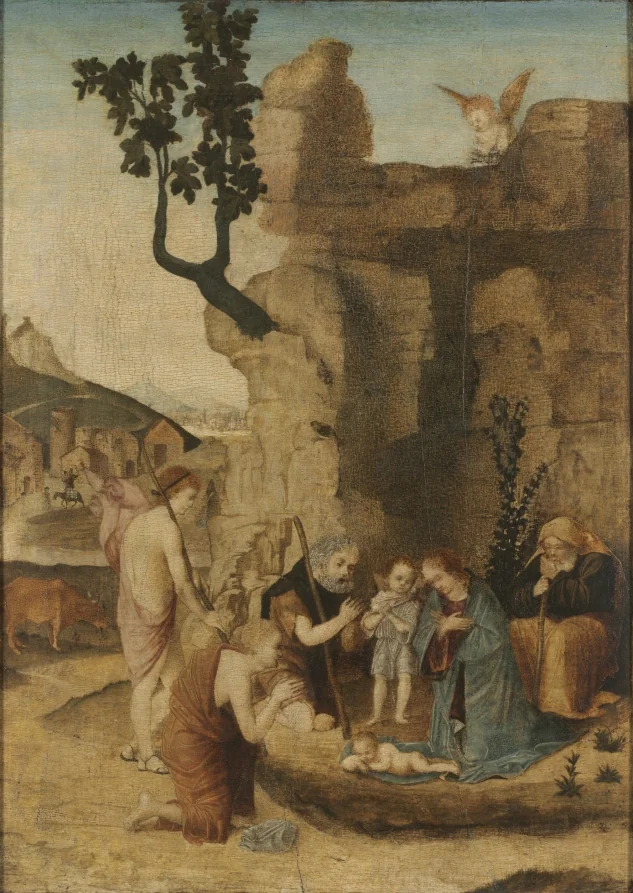
Adoration of the Shepherds from c. 1500 is an anonymous Netherlandish painting depicting the biblical episode in which shepherds come to worship the newborn Christ, rendered in the precise, detailed manner that distinguishes the best Netherlandish painting of the early 16th century. The c. 1500 date places this at the turn of the 16th century, when Netherlandish painting was producing some of its most accomplished religious subjects in the precise, detailed manner that the Netherlandish tradition had developed from the innovations of Jan van Eyck and Rogier van der Weyden.
Cultural Impact
Adoration of the Shepherds is important in the history of Netherlandish painting because it demonstrates the precise, detailed religious manner that the Netherlandish tradition had developed by the turn of the 16th century. The anonymous painting shows the Netherlandish tradition at a high level of accomplishment—precise in detail, rich in color, and devotional in subject—even without a known master's name attached.
Why It Matters
Adoration of the Shepherds is anonymous Netherlandish painting at its most precise: the biblical episode rendered in the detailed, devotional manner that the Netherlandish tradition had developed by c. 1500. The painting shows the Netherlandish tradition at a high level of accomplishment—precise in detail, rich in color, and devotional in subject—even without a known master's name.