Provenance
Mrs. Henry S. [Mary Louisa Southworth] Upson [1859-1944], Cleveland, OH, given to the Cleveland Museum of Art (?-1916); The Cleveland Museum of Art, Cleveland, OH (1916-)
Accession Number
1916.932
Medium
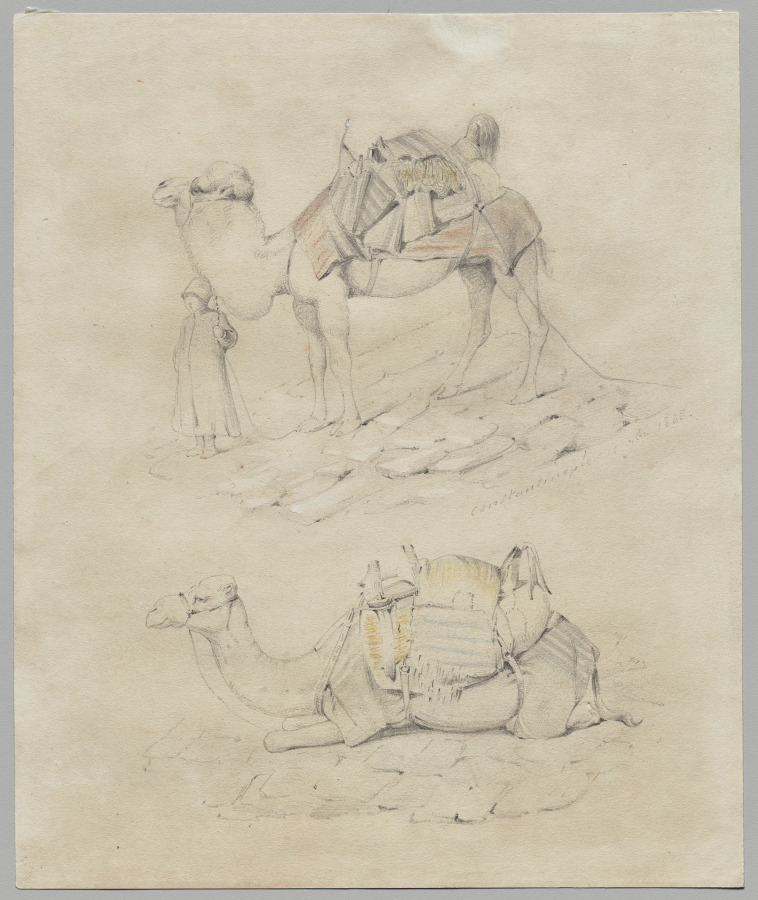
Ink and color on paper
Dimensions
Overall: 38.8 x 55 cm (15 1/4 x 21 5/8 in.)
Classification
Painting
Credit Line
Gift of Mrs. Henry S. Upson
Tags
Painting Baroque (1600–1750) Ink Paper Color: Orange Color: Gold
Background & Context
Background Story
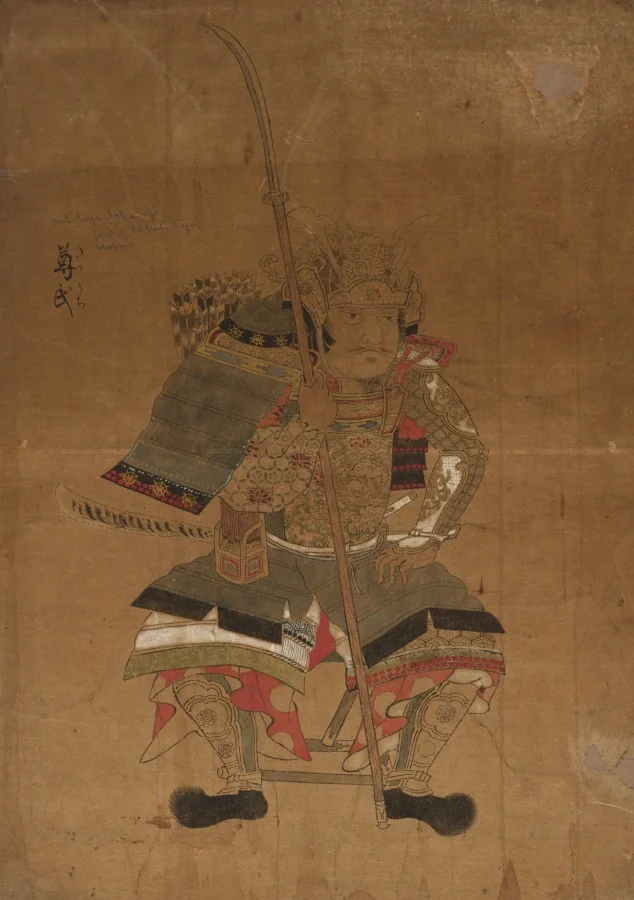
This sketch model for portraits of Ashikaga Takauji is a Japanese Edo-period work relating to one of the most consequential and controversial figures in Japanese history. Ashikaga Takauji (1305-1358) was the founder and first shogun of the Ashikaga shogunate, which governed Japan from 1336 until 1573. Takauji rose to prominence as a military leader who initially supported Emperor Go-Daigo's attempt to restore direct imperial rule, then turned against the emperor to establish his own military government, triggering a complex civil war and founding a shogunate that would preside over both great cultural flourishing and deep political fragmentation. The Ashikaga shogunate is remembered for its paradoxical legacy: it produced the brilliant culture of the Muromachi period, including the development of the tea ceremony, Noh theater, Zen garden design, and ink painting, while simultaneously failing to maintain political unity. Portraits of Ashikaga shoguns in the Edo period served multiple purposes: they commemorated the warrior houses that traced their lineage to the great figures of the past, they provided models of samurai virtue and authority, and they satisfied the popular appetite for images of historical celebrities. The sketch model, a preparatory work for finished portraits, reveals the first stage of the artistic process, when the artist establishes the subject's likeness and presence before refining the image for its final public presentation. During the Edo period, when the Tokugawa shogunate enforced peace and regulated the samurai class, portraits of earlier warriors like Takauji allowed the martial heritage of the samurai to be celebrated in a controlled, ritual context.
Cultural Impact
Edo-period portraits of Ashikaga Takauji reflect the complex relationship between warrior heritage and political legitimacy in Japanese culture. Takauji's founding of the Ashikaga shogunate, which produced extraordinary cultural achievements alongside political instability, makes him a figure of enduring historical and cultural fascination.
Why It Matters
This sketch model for a portrait of Japan's first Ashikaga shogun illuminates how Edo-period Japan venerated its warrior founders through art, connecting the Tokugawa present to the martial past.