Provenance
James Jackson Jarves, New York, before 1883; Mrs. Liberty E. Holden, Cleveland, 1884. Holden Collection, 1916.
Accession Number
1916.965
Medium
oil on canvas
Dimensions
Unframed: 59.6 x 49.5 cm (23 7/16 x 19 1/2 in.)
Classification
Painting
Credit Line
Holden Collection
Tags
Painting Renaissance (1400–1599) Oil Painting Canvas Color: Orange Color: Gold
Background & Context
Background Story
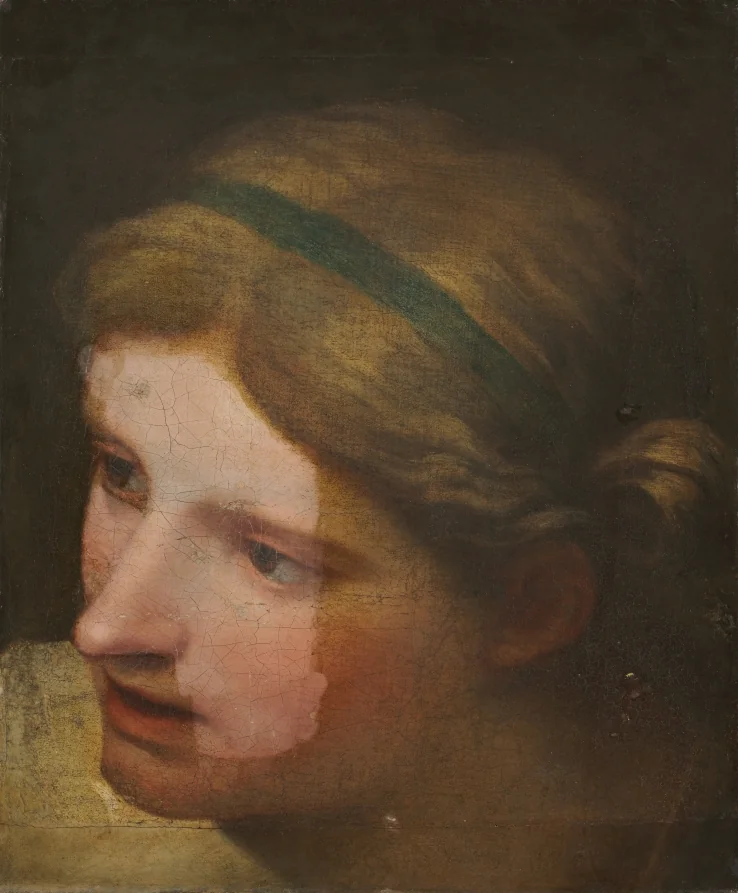
Listening Angel from the 16th century is an anonymous Italian sculptural work depicting an angel in the elegant, graceful manner that distinguishes the best Italian sculpture of the High Renaissance and Mannerist periods. The 16th century date places this in the period when Italian sculpture was producing some of its most accomplished work in the elegant, graceful manner that distinguishes the High Renaissance and Mannerist traditions, and the listening pose of the angel shows the elegant, graceful treatment of the figure that is characteristic of the period.
Cultural Impact
Listening Angel is important in the context of Italian 16th-century sculpture because it demonstrates the elegant, graceful treatment of the figure that distinguishes the best sculpture of the High Renaissance and Mannerist periods. The listening pose of the angel—combining the elegant treatment of the figure with the devotional subject—shows the combination of grace and devotion that is characteristic of 16th-century Italian sculpture.
Why It Matters
Listening Angel is anonymous Italian 16th-century sculpture: an angel rendered in the elegant, graceful manner that distinguishes the best sculpture of the High Renaissance and Mannerist periods. The listening pose shows the combination of grace and devotion that is characteristic of 16th-century Italian sculpture.