Provenance
Purchased by Langdon Warner [1881-1955], as agent of the Cleveland Museum of Art (?-1917); The Cleveland Museum of Art, Cleveland, OH (1917-)
Accession Number
1917.100
Medium
handscroll; ink and slight color on paper
Dimensions
Overall: 28 x 48.1 cm (11 x 18 15/16 in.)
Classification
Painting
Credit Line
Worcester R. Warner Collection
Tags
Painting Baroque (1600–1750) Ink Paper Color: Gray
Background & Context
Background Story
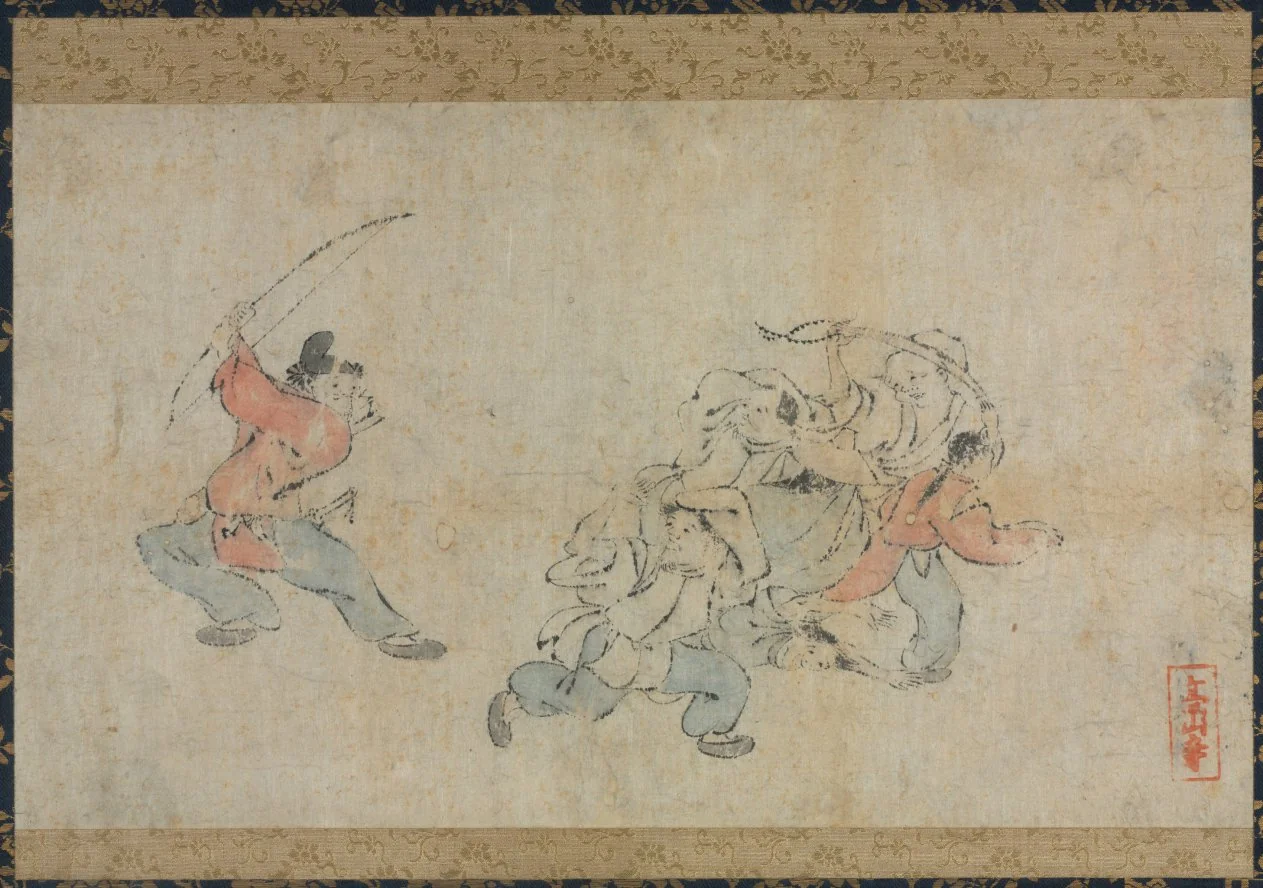
Toba-e (Comic Picture) from c. 1615-99 is an anonymous Japanese painting in the comic picture tradition named after the priest Toba Sojo, whose attributed comic scroll paintings of animals and humans are considered the origin of manga. The Toba-e tradition of comic pictures—depicting humorous scenes of everyday life with satirical exaggeration—was one of the most popular types of Edo period painting, and the c. 1615-99 date places this in the early Edo period when the Toba-e tradition was being established as a distinct genre of Japanese art.
Cultural Impact
Toba-e (Comic Picture) is important in the history of Japanese art because it demonstrates the comic picture tradition that is considered one of the origins of manga. The Toba-e tradition—named after the priest Toba Sojo—represents the origin of comic and satirical art in Japan, and the c. 1615-99 painting shows the early Edo period tradition that would eventually develop into the manga tradition that is now one of the most popular art forms in the world.
Why It Matters
Toba-e (Comic Picture) is an early Edo period comic painting: a humorous scene in the tradition named after the priest Toba Sojo that is considered one of the origins of manga. The c. 1615-99 painting shows the satirical comic tradition that would eventually develop into one of the most popular art forms in the world.