Provenance
Purchased by Langdon Warner [1881–1955], as agent of the Cleveland Museum of Art (1917); The Cleveland Museum of Art, Cleveland, OH (1917–)
Accession Number
1917.103
Medium
color on silk
Dimensions
Overall: 101 x 63.9 cm (39 3/4 x 25 3/16 in.)
Classification
Painting
Credit Line
Worcester R. Warner Collection
Tags
Painting Baroque (1600–1750) Silk Painting Color: Orange Color: Brown
Background & Context
Background Story
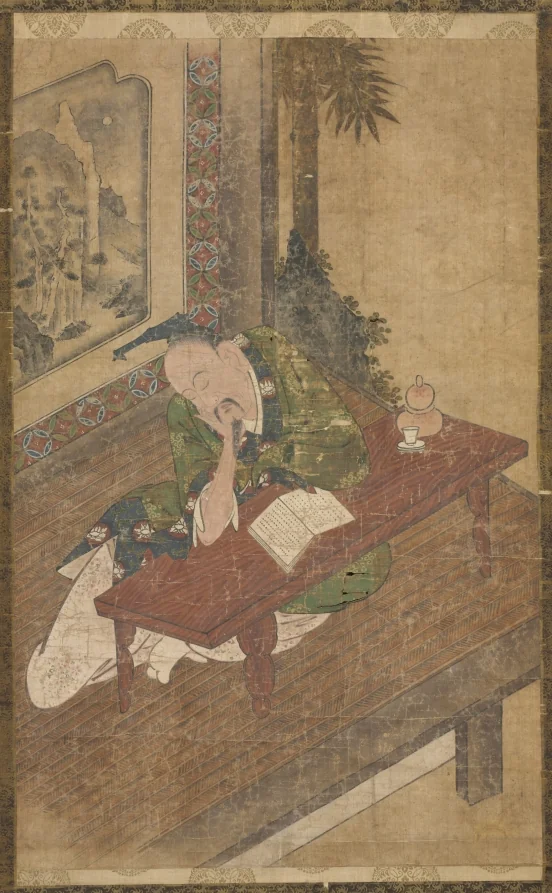
Sleeping Poet is an anonymous work dating to approximately the 1700s that depicts a slumbering figure identified as a poet, a subject with deep roots in the visual culture of the Enlightenment and the transition to Romanticism. The sleeping poet is a motif that appears in various European artistic traditions, carrying associations of divine inspiration, creative reverie, and the liminal state between waking consciousness and the dream world where artistic vision allegedly originates. In classical mythology, poets and seers received their visions in sleep or trance states, and the Renaissance and Baroque traditions frequently depicted poets in repose as an emblem of the unconscious sources of creativity. During the 18th century, the subject acquired additional resonance as Enlightenment thinkers explored the relationship between reason and imagination, consciousness and dream. The sleeping poet could represent the creative mind surrendering to the irrational forces that produce poetry, or alternatively, the poet's rest after the labors of composition. The dating of this work to the 1700s spans a century of enormous change in European culture, from the late Baroque through the Rococo and into Neoclassicism and early Romanticism. Without a known artist, the work must be assessed on its formal qualities and iconographic content. The depiction of a sleeping figure allowed the artist to demonstrate skill in rendering the relaxed body and softened features of sleep, while the poet's attributes, whether books, a lyre, a quill, or a Classical drapery, would identify the figure's creative calling. The subject connects to a philosophical tradition stretching from Plato's theory of divine inspiration through the Romantic celebration of the irrational sources of artistic creation.
Cultural Impact
The sleeping poet motif bridges classical and Romantic traditions, embodying centuries of thought about the mysterious relationship between consciousness and creative inspiration. Works on this subject reflect the Enlightenment and pre-Romantic fascination with the unconscious sources of artistic production.
Why It Matters
This anonymous 18th-century work preserves a rich visual tradition linking poetic inspiration to sleep and dream, a connection that illuminates how past cultures understood the origins of creative thought.