Accession Number
1917.1065
Medium
Gum tempera and ink on paper
Dimensions
Image: 15.7 x 20.6 cm (6 3/16 x 8 1/8 in.); Overall: 21.3 x 28.9 cm (8 3/8 x 11 3/8 in.)
Classification
Painting
Credit Line
Gift of the John Huntington Art and Polytechnic Trust by exchange
Tags
Painting Baroque (1600–1750) Ink Tempera Paper Color: Orange Color: Gold
Background & Context
Background Story
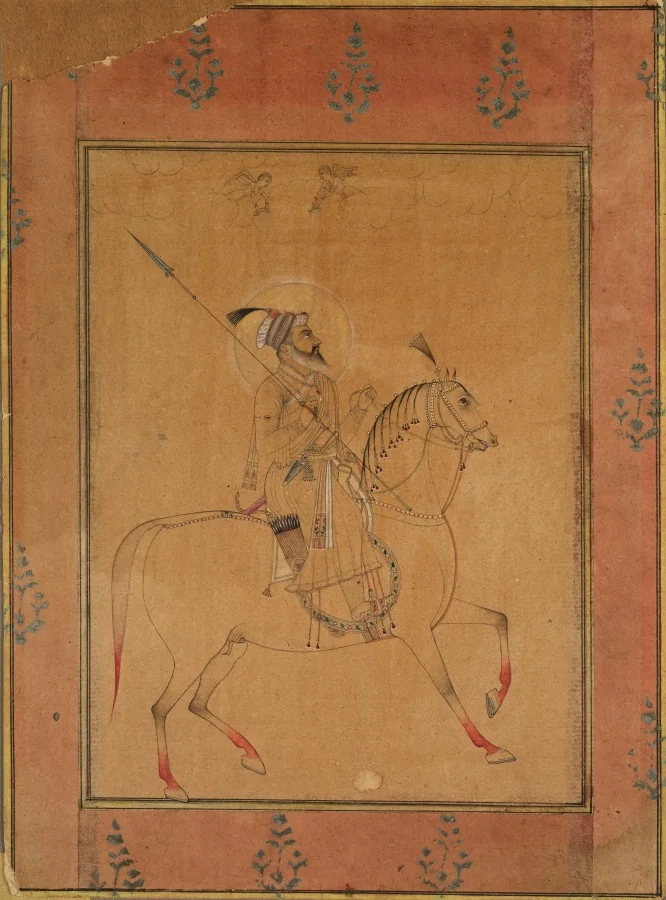
Emperor Shah Jahan from the late 1600s is an anonymous Mughal painting depicting the Mughal emperor Shah Jahan (1592-1666), the builder of the Taj Mahal and one of the most powerful rulers in Indian history. Portraits of Shah Jahan were among the most important subjects in Mughal painting, as they combined the court portrait tradition with the Mughal emperor's role as both political ruler and cultural patron. The late 1600s date places this after Shah Jahan's death, in the reign of his son Aurangzeb, when portraits of the former emperor were produced as part of the Mughal court's continuing tradition of imperial portraiture.
Cultural Impact
Emperor Shah Jahan is important in the history of Mughal painting because it demonstrates the imperial portrait tradition that was one of the most important subjects in Mughal art. Mughal imperial portraiture—combining precise observation with the court convention of depicting the emperor as both political ruler and cultural patron—represents one of the most accomplished portrait traditions in world art, and the late 1600s painting shows this tradition applied to the builder of the Taj Mahal.
Why It Matters
Emperor Shah Jahan is an anonymous Mughal portrait of the builder of the Taj Mahal, rendered in the imperial portrait tradition that was one of the most accomplished in world art. The late 1600s painting shows the Mughal court's tradition of depicting the emperor as both political ruler and cultural patron.