Accession Number
1919.914
Medium
hanging scroll; ink and color on paper
Dimensions
Overall: 81.3 x 39.4 cm (32 x 15 1/2 in.)
Classification
Painting
Credit Line
Gift of Ralph King
Tags
Painting Neoclassical & Romantic (1751–1850) Ink Paper Color: Red Color: Brown
Background & Context
Background Story
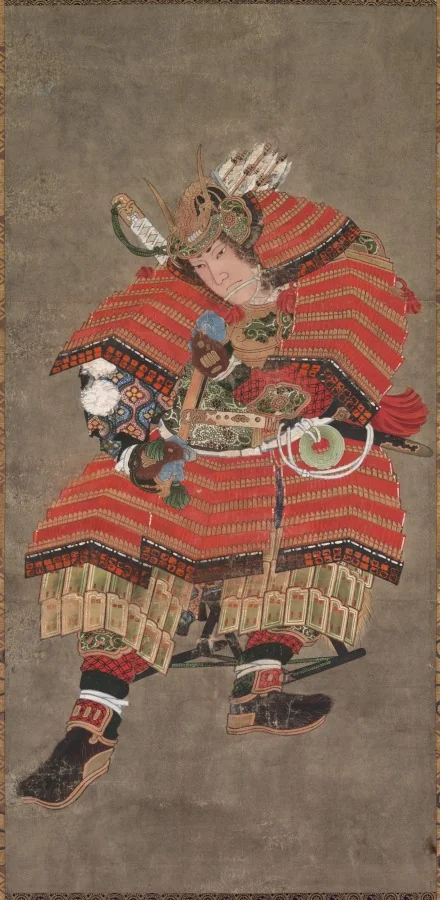
This portrait of Minamoto no Yoshitsune is a Japanese work from the late Edo period (1800-1868), depicting one of the most beloved and tragic heroes of Japanese history. Minamoto no Yoshitsune (1159-1189) was a brilliant military commander whose stunning victories during the Genpei War helped his half-brother Yoritomo establish the first shogunate, only to be persecuted and driven to suicide by the very brother he had served. Yoshitsune's story, with its themes of martial brilliance, loyalty, betrayal, and tragic death, made him the most popular hero of the Japanese warrior tradition, celebrated in literature, drama, and visual art from the medieval period to the present. Portraits of Yoshitsune in the Edo period typically depict him as a refined, handsome warrior, often with distinctive attributes such as the horned helmet associated with his legendary appearance. The woodblock print and painting traditions of the Edo period produced vast numbers of warrior portraits, known as musha-e, which were enormously popular with urban audiences. These images served both as entertainment and as vehicles for the cultivation of martial values that the Tokugawa shogunate promoted as part of its ideology of social order. The dating of this work to 1800-1868, the final decades of the Edo period, is significant because this was a time when the cult of famous warriors was intensifying even as the social order that warriors defended was beginning to unravel. Portraits of Yoshitsune from this period often emphasize his nobility and suffering, qualities that resonated with audiences familiar with the pressures of a rigid social hierarchy that was becoming increasingly difficult to sustain...
Cultural Impact
Portraits of Yoshitsune represent one of the most popular subjects in Edo-period visual culture, reflecting both the Japanese fascination with warrior heroes and the political uses of martial imagery. The tragedy of Yoshitsune, betrayed by the brother he served, resonated deeply in a society organized around loyalty and duty.
Why It Matters
This portrait preserves the enduring Japanese fascination with Yoshitsune, the tragic warrior hero whose story of military genius and betrayed loyalty has resonated across centuries of Japanese culture.