Provenance
Estate of Leonard C. Hanna, Jr. (?-1958); The Cleveland Museum of Art, Cleveland, OH (November 29, 1958-)
Accession Number
1958.8
Medium
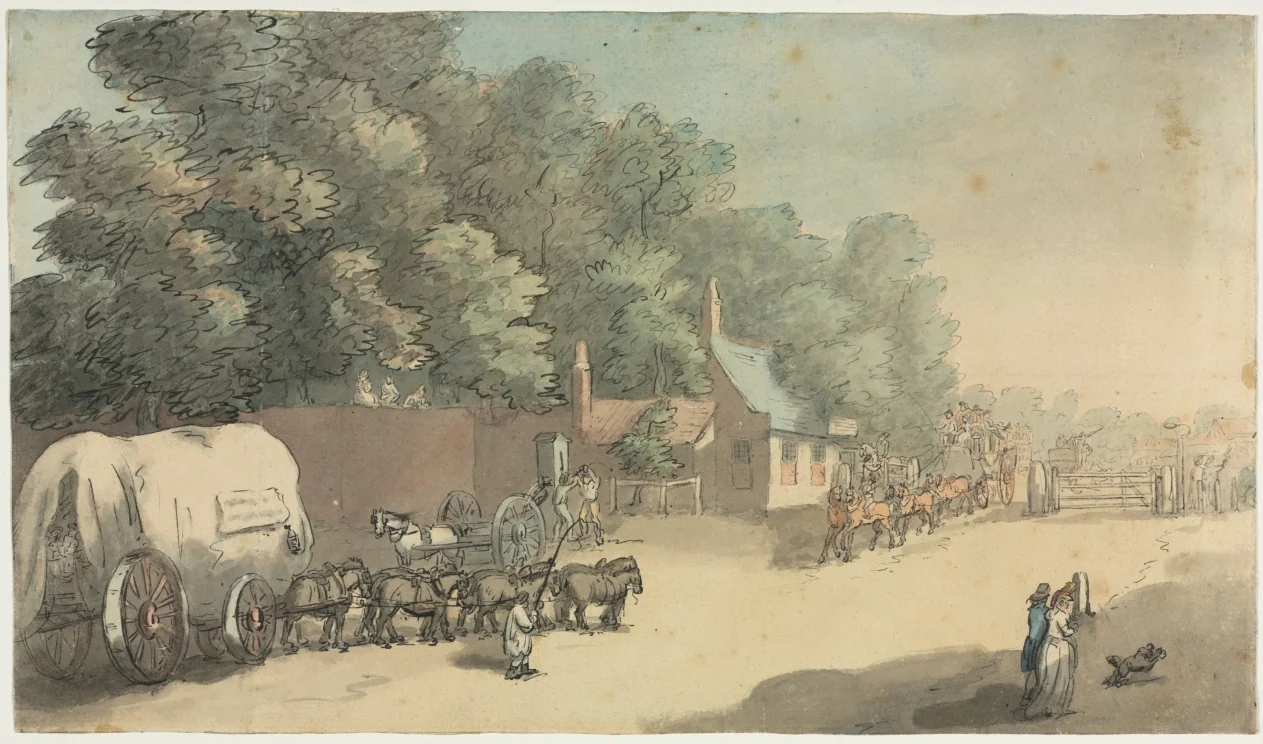
pen and ink and watercolor wash
Dimensions
Sheet: 18.2 x 31.4 cm (7 3/16 x 12 3/8 in.)
Classification
Drawing
Credit Line
Bequest of Leonard C. Hanna Jr.
Tags
Drawing Baroque (1600–1750) Watercolor Ink Color: Yellow Color: Gray
Background & Context
Background Story
The Turnpike Gate, dating from the 1700s and attributed to an anonymous artist, depicts a feature of the English landscape that was both ubiquitous and historically significant. Turnpike gates—or toll gates—were physical manifestations of the road improvement system that transformed English transportation during the eighteenth century. Turnpike trusts, established by Acts of Parliament from the early 1700s onward, were empowered to collect tolls from road users in exchange for maintaining and improving specific stretches of highway. By mid-century, turnpike gates were familiar landmarks across the English countryside, and their presence in a painting immediately marks the scene as contemporary rather than timeless. The anonymous artist's depiction of a turnpike gate likely shows the gatekeeper's house or lodge, the wooden or iron barrier itself, and the road stretching away in both directions—a composition that speaks to the experience of travel and the commercialization of routes that had previously been maintained by local parishes. The turnpike system was controversial and often deeply unpopular with ordinary travelers and farmers who resented paying tolls, and paintings of turnpike gates sometimes carried implicit social commentary. The 1700s were a period of profound infrastructural transformation in England, as improved roads facilitated the movement of goods, people, and ideas that would fuel the Industrial Revolution.
Cultural Impact
Turnpike gate paintings document the eighteenth-century revolution in English transportation infrastructure, capturing the physical markers of a system that enabled commerce and travel essential to the coming Industrial Revolution.
Why It Matters
This anonymous work preserves a visual record of England's turnpike system during its formative period, documenting the infrastructure that transformed eighteenth-century travel and commerce.