Provenance
Mrs. A. Dean Perry, given to The Cleveland Museum of Art (?-1960); The Cleveland Museum of Art, Cleveland, OH (August 13, 1960-)
Accession Number
1960.168
Medium
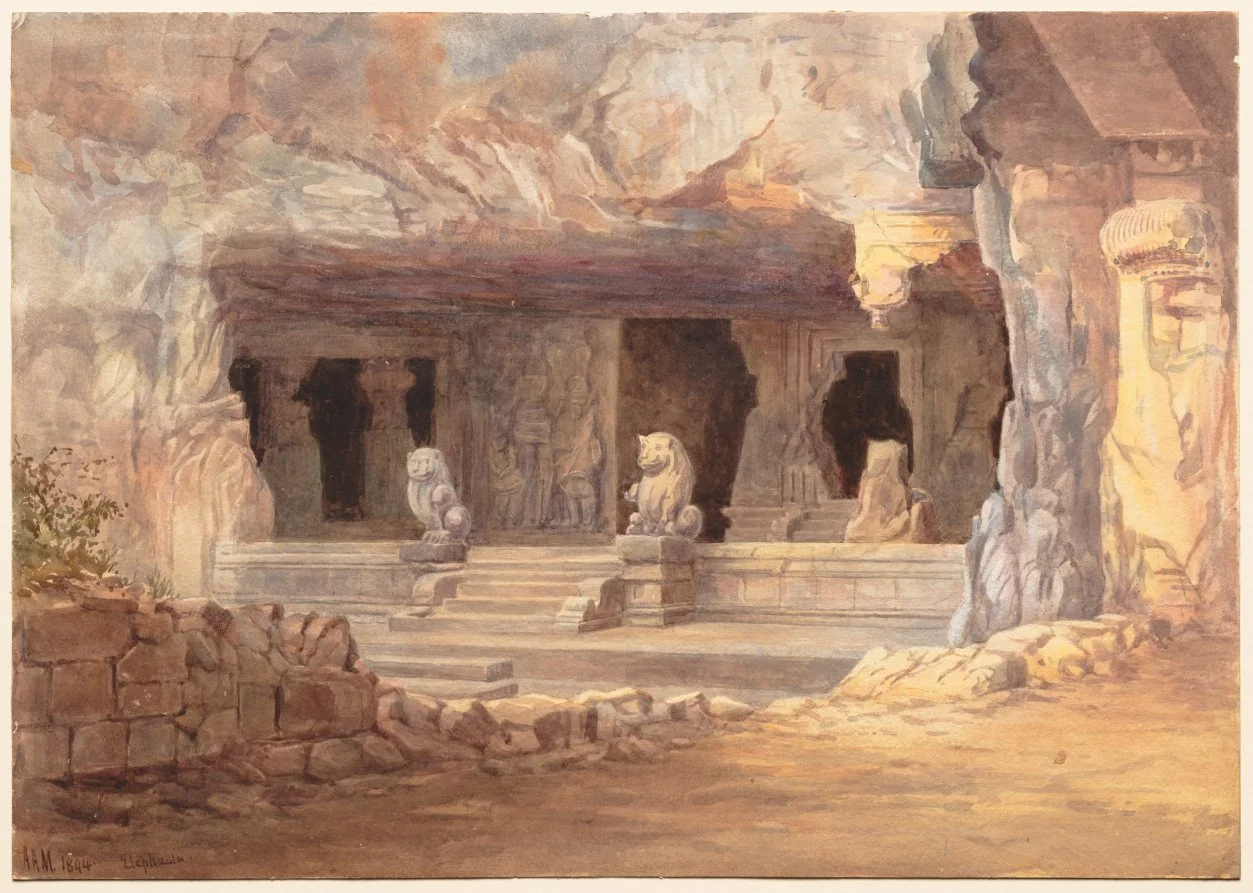
watercolor
Dimensions
Sheet: 35.6 x 49.7 cm (14 x 19 9/16 in.)
Classification
Drawing
Credit Line
Gift of Mrs. A. Dean Perry in memory of Mr. and Mrs. Edward Belden Greene
Tags
Drawing Impressionist & Modern (1851–1900) Watercolor Color: Orange Color: Gray
Background & Context
Background Story
View of Elephanta, dated 1894 and by an unknown artist, depicts the island famous for its spectacular cave temples dedicated to the Hindu god Shiva. Elephanta Island, located in Mumbai Harbor, contains cave complexes carved between the fifth and eighth centuries that represent some of the finest examples of Hindu rock-cut architecture and sculpture in India. The most famous of these sculptures is the trimurti, a three-headed representation of Shiva measuring over eighteen feet in height, considered one of the masterpieces of Indian art. A view of Elephanta in 1894 would have been produced during the height of British colonial rule in India, when the island's temples had become a major destination for colonial administrators, scholars, and tourists intrigued by India's ancient cultural heritage. The unknown artist's depiction likely shows the approach to the island by boat, with the cave entrances visible in the hillside—a view that countless visitors recorded in drawings, paintings, and eventually photographs. The year 1894 places this work during a period of growing Western interest in Indian art and archaeology, spurred by colonial survey projects and the establishment of archaeological museums. The preservation of the Elephanta caves was itself a product of colonial-era interest, though one complicated by the politics of occupation and the question of who had the right and responsibility to preserve India's heritage.
Cultural Impact
Views of Elephanta shaped Western understanding of Indian art and contributed to the preservation movement that protected these cave temples, while also reflecting the colonial dynamics of heritage management in British India.
Why It Matters
This work documents one of India's most important heritage sites during the colonial period, capturing the intersection of ancient religious art and colonial-era heritage preservation.